Best Pool Pad for Above Ground Pool (2026): 3 Picks
Accessories
The best pool pad for an above ground pool is the U.S. Pool Supply Ground Shield 24 ft pad for round pools. The Rhino Pad adds a vapor barrier and a little more padding, and the Liner Life pre-cut pad is the one for rectangle and oval pools.
Our picks
A pool pad is the layer that goes on the ground before the liner, and it is the cheapest insurance you can buy for an above ground pool. The U.S. Pool Supply Ground Shield covers most round pools, while the Rhino Pad and the Liner Life pre-cut pad each solve a job the first pad does not.
A liner is the most expensive part of an above ground pool. A single sharp rock, a buried root, or a patch of nutgrass can put a pinhole through it, and once water is in the pool, that pinhole is a repair. A pad is the barrier that stands between the ground and the vinyl.
This guide sits with the other pool accessories gear, alongside the best pool skimmer pillar and the above ground pool ladder and pool steps guides. If a liner is already damaged, the liner patch kit guide is the one to read first. The pads below are for new installs and liner swaps, before the water goes in.
What a pool pad actually does
A pad does three jobs, and it does them whether the pool is soft-sided or steel-walled.
The first job is puncture protection. It spreads the point of a rock or a root over a wider area, so the liner does not take the full load. The second is weed control. A dense, opaque fabric blocks the light that grass and weeds need to push through the floor. The third is separation, so the liner is not sitting directly on damp soil or rough concrete.
What a pad does not do is fix an unlevel base. If the ground is not level and compacted, a pad on top of it will not save the pool. Level first, pad second.
What to look for before you buy
Four things decide whether a pad fits your pool and your patience.
Fabric weight. This is the number that predicts puncture resistance. Budget pads sit near 220 grams per square meter, thicker pads run to 300 or 400, and heavy felt pads go higher still. More weight means more protection and a heavier roll to handle.
Shape and size. Pre-cut round pads are the least work. Rectangle and oval pools usually need a matching pre-cut sheet or a larger sheet trimmed down. Buy for the pool you have, not the pool you might buy later.
Install style. Some pads are a single seamless sheet, while others are cut to size on site. Seams and folds can leave ridges under a liner, so a pad that can be taped flat or stretched smooth is easier to live with.
Cove and walls. The pad protects the floor. A peel-and-stick pool cove protects the corner where the floor meets the wall. Many brands suggest both, and the cove is what keeps the liner from creasing at the base.
Best overall: U.S. Pool Supply Ground Shield 24 ft Round
The U.S. Pool Supply Ground Shield 24 ft Round is the pad to start with for a typical round above ground pool. It is a 220 gram non-woven geotextile sheet that the brand sells as a puncture and weed barrier, and the listing describes it as 45 percent off list at the moment.
The reason it wins is how easy it is to fit. It is a single sheet that works on soft-sided and hard-sided pools, it trims with a utility knife, and it extends past the pool edge so there is no gap at the wall. The fabric also lets moisture pass through, which keeps water from pooling against the frame.
Buy it if you have a round pool, you want one sheet that covers the floor, and you would rather trim a little than measure a lot. Skip it if you want a thick foam feel underfoot, or if your base is not level enough to start with.
Best cushioning: Rhino Pad 24 ft Round
The Rhino Pad 24 ft Round is the pick when cushioning and moisture control matter more than price. It is pre-measured for a 24 foot round pool, so there is nothing to cut, and the brand builds it partly from recycled material. The vapor layer keeps ground moisture away from the metal frame, which is the part that rusts first.
Owners describe it as a good protective layer that works over concrete, dirt, grass, and wood, and reviewers note it helps during liner install because it stays put. It is the pad that feels more like a floor and less like a sheet.
Buy it if you want a pre-cut sheet with a vapor barrier and a little more give underfoot. Skip it if you want the lowest price per sheet, or if your pool is a size the pre-cut run does not cover.
Best for rectangle and oval pools: Liner Life pre-cut pad
The Liner Life LL1224RE is the pad for rectangle and oval above ground pools. It is commercial grade polyester geotextile that is pre-cut to a 12 by 24 footprint, and the brand suggests pairing it with a pool cove at the base. Liner Life's pre-cut pads carry a large review base across the size range.
The value here is the fit. Round pads on a rectangle pool mean cutting a square out of a circle, and the waste shows up at the corners. A matching pre-cut sheet removes that step and gives the liner a flat, even surface to sit on.
Buy it if your pool is a rectangle or oval, or you are replacing a liner and want the corners covered. Skip it if your pool is round, where a round pad is simpler and cheaper per square foot.
Pad, tarp, or sand? What to put under the pool
The three options are not interchangeable, and the choice comes down to level of protection.
A geotextile pad is the standard answer. It resists punctures, lets moisture drain, and blocks weeds. It is the layer that protects the liner directly.
A tarp is cheaper and blocks weeds, but it tears on the same rocks a pad is meant to blunt. It is a weed barrier at best, not a puncture barrier.
Sand levels the base and feels smooth, but sand alone does nothing about a rock or a root. Most owners treat sand as the leveling step and a pad as the protection step, and use both.
If the ground is already smooth and free of roots, one good pad is enough. If it is rough, level it, then add a pad. Skipping the leveling step is how people blame the pad for a lumpy floor.
How to install a pool pad
Installation is a weekend-morning job, and the order matters more than the tools.
- Clear and level the site. Remove rocks, roots, and glass, then compact the ground and check it with a long level.
- Set the frame if the pool uses one, so the pad can be trimmed to the wall line.
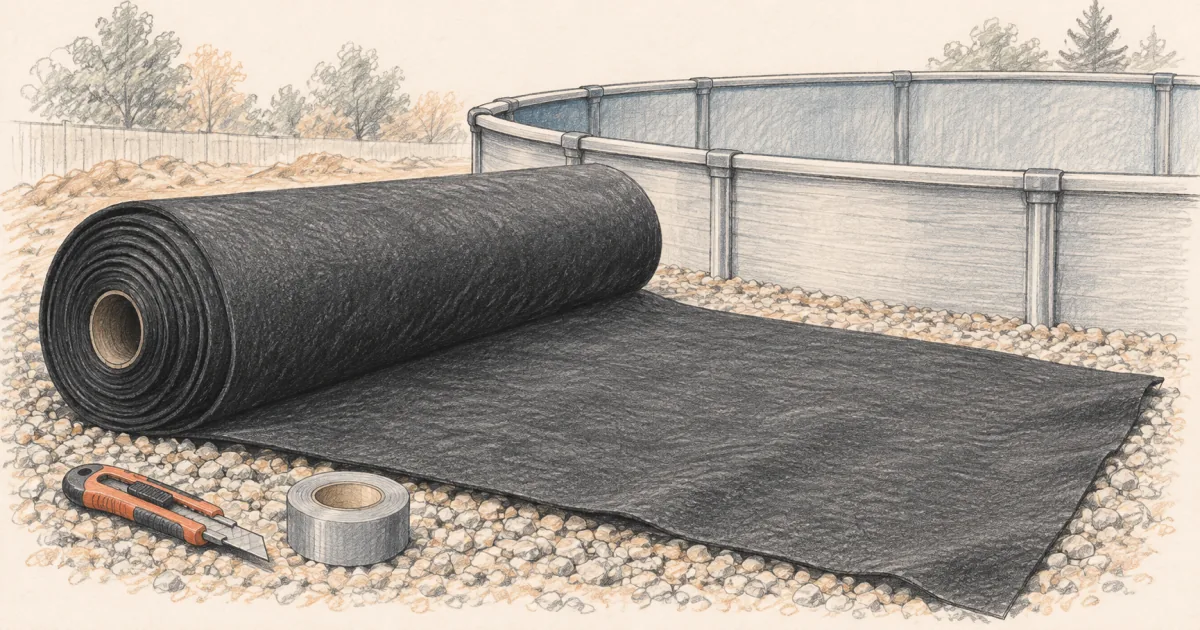
- Unroll the pad and center it, letting it extend a few inches past the edge.
- Overlap or tape seams if you are using more than one sheet, and smooth out folds.
- Trim the excess with a utility knife, leaving a little material turned up at the wall.
- Add a peel-and-stick cove where the floor meets the wall, then set the liner.
Do the trimming before the liner goes in. Once the vinyl is laid and the pool is filling, moving the pad is no longer an option.
Bottom line
Buy the U.S. Pool Supply Ground Shield 24 ft Round for a simple round pool and the least fuss. Buy the Rhino Pad 24 ft Round if you want a vapor barrier and more cushioning. Buy the Liner Life pre-cut pad if your pool is a rectangle or an oval.
Level the ground, lay the pad so it runs past the wall, and add a cove at the base. That combination is what keeps a liner out of the repair list.
Frequently Asked Questions
Do I need a pool pad under an above ground pool?
It is not required, but it is the cheapest protection you can buy for a vinyl liner. A pad separates the liner from rocks, roots, and glass in the ground, and it blocks weeds from pushing up into the floor. Replacement liners cost far more than a pad.
What is the best material for a pool pad?
Non-woven geotextile fabric is the standard. It resists punctures, lets moisture pass through instead of trapping it, and does not rot the way a tarp can. Foam pads feel softer but break down faster under the weight of a full pool.
How thick should a pool pad be?
Look at the fabric weight, not just the label. Most pads run from about 220 to 400 grams per square meter. Heavier fabric resists punctures longer, but it also costs more and is harder to move and trim alone.
Can I use a tarp instead of a pool pad?
A tarp blocks weeds but tears easily on the same rocks a pad is meant to blunt, and trapped water can sit against the frame. If budget is the issue, a thin geotextile pad still beats a tarp for the same job.
Do pool pads stop weeds from growing through the liner?
A dense, opaque pad stops most weeds by cutting off light. Nutgrass is the stubborn exception and can push through even good fabric, which is why some brands note that nutgrass is not covered by the warranty.
How do I install a pool pad?
Level and compact the ground first, then unroll the pad so it extends a few inches past the pool edge, overlap or tape seams if you have more than one sheet, and trim the excess with a utility knife. Set the frame and liner on top, then add a cove at the base.
Should I put sand under an above ground pool?
A thin, level sand base is common under a soft-sided pool, but sand alone does not stop punctures or weeds. Most owners pair a level base with a geotextile pad, so the sand smooths and the pad protects.
Can I use a pool pad on a concrete or gravel pad?
Yes. Pads sit over concrete, gravel, wood, and grass. On concrete, the pad mainly cushions and separates, and it still helps stop the liner from wearing against a rough surface.