Best Dog Pool Ramp (2026): Ramps That Get a Wet Dog Out
Accessories
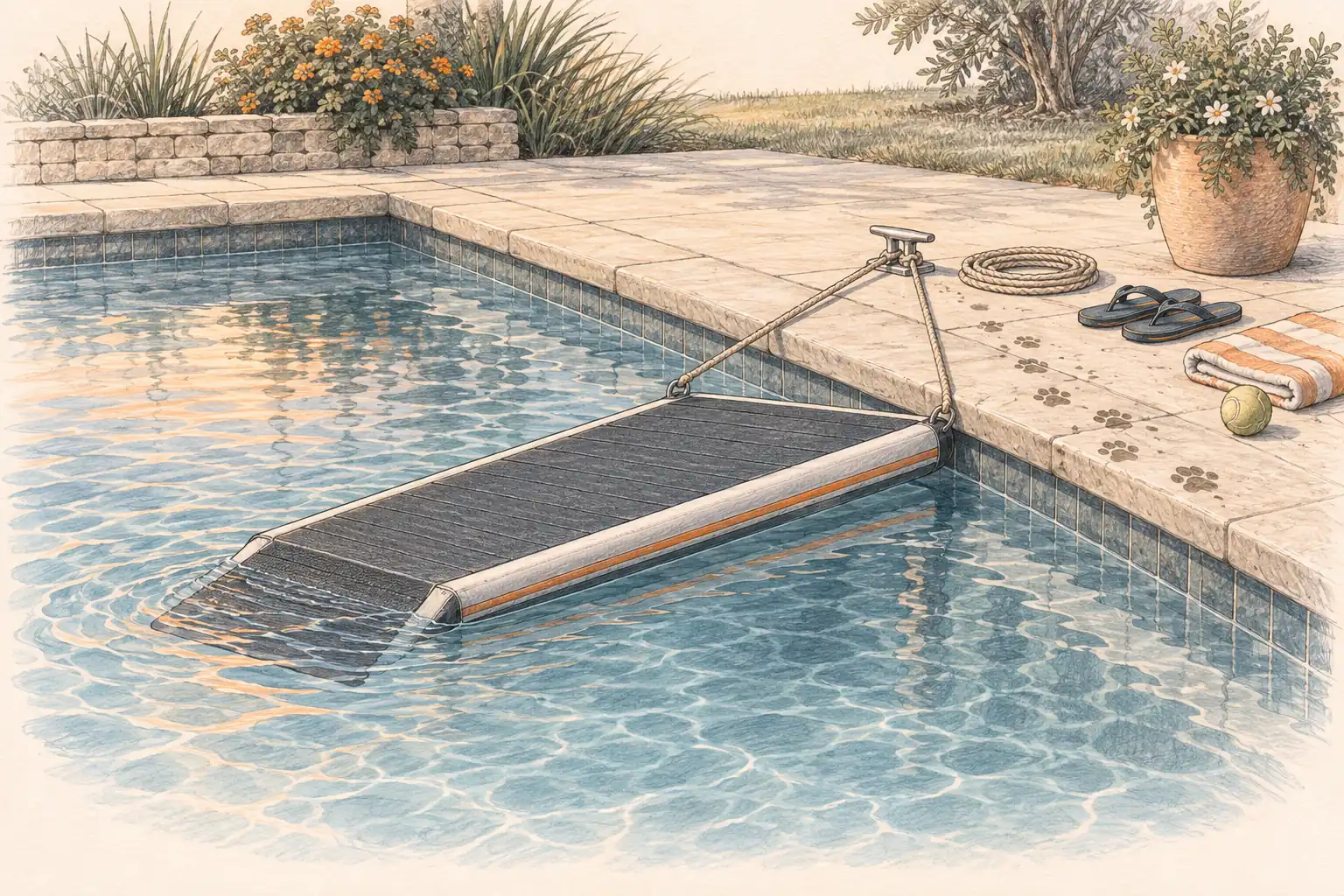
The best dog pool ramp for most pools is the Dog-DOK, a floating platform with weighted steps that sit just under the water. Choose the PUP ON for a big dog and the Iceberg dock when the budget is tighter.
Our picks
A wet dog is heavier than you think, and a tired dog at the deep end is the reason most people start looking for a ramp. Lifting 70 pounds of wet Labrador onto a deck is bad for your back and worse for the dog's hips. A floating ramp lets the dog do the work at its own pace. For most backyards, the DOK Dog-DOK is the ramp that solves it, because the weighted deck puts a walkable surface just under the waterline.
This guide sits with the rest of the deck and entry gear in the accessories section. If you are still sorting out how the dog gets in and out, the best pool ladder for an above ground pool guide covers the human side of the same problem.
Floating ramps are the common choice because they place a submerged, textured surface right at the waterline. That is the part that matters. A dog climbs a ramp, not a wall.
What to look for in a dog pool ramp
Five things decide whether your dog will actually use it.
Capacity. Match the rating to the dog plus drag. A 200 lb ramp works for most medium dogs, and a 250 lb ramp is right for a big breed or a two-dog house.
Traction over the whole deck. Look for EVA foam or a textured mesh across the full surface, not a small pad at the top. A wet dog slips on bare PVC.
Weighted steps. The climbing surface should sit slightly below the waterline so the dog has something to push against. Cheap foam ramps float on top and roll away from a paw.
Tie-down points. D-rings and rope are how the ramp stays put. Count them before you buy, because a loose ramp is a lost ramp.
Pack-down size. Inflatable ramps fold to a bag. If you store gear in a shed, size matters as much as weight rating.
Best overall: Dog-DOK
The DOK Dog-DOK is the ramp we would hand most pool owners. It ships 60 by 40 inches and takes dogs up to 250 pounds, with a traction deck over the surface and weighted steps that stay submerged.
The details show up in use. The high-contrast black and white sides help a dog find the ramp from out in the water, and the four tie-down points let you pin it to a deck, a dock, a pontoon rail, or an above-ground pool wall. The box includes a hand pump, two ropes, a carry bag, and a repair kit, which is the whole kit you need on day one.
Buy it if you have a dog that swims hard and gets tired before it remembers where the steps are. Skip it if you are not willing to tie it off, because a floating platform that drifts is worse than no ramp at all.
Best for big dogs: PUP ON
The Beyond Marina PUP ON is the wide-deck pick. It measures 59 by 47 by 6 inches, supports up to 250 pounds, and covers the whole ramp surface with EVA traction.
Two choices here are smarter than they look. Yellow and blue are the colors dogs see best, so the ramp reads clearly from the water. And the stainless D-rings give you options for tying off on a dock, a pontoon, or a pool deck without adding hardware.
Buy it if you have a large breed, a dock, or a boat in the mix. Skip it if your deck is narrow, because this ramp needs a landing zone.
Best value: Iceberg inflatable dock
The Iceberg Toys inflatable dock is the budget pick at 4.6 by 3 feet with a 200 pound rating. The ramp is angled rather than flat, which shifts the climb off the hips of an older or recovering dog.
The construction is the same family as the bigger ramps: Oxford cloth over PVC, anti-slip texture, and a compact fold for storage. It does the job for a medium dog and a small pool, and it costs less than half of the top pick.
Buy it if you have a medium dog and a tight storage space. Skip it if your dog is over about 80 pounds, because capacity is the whole game with a floating ramp.
How to teach a dog to use the ramp
Dogs are not born knowing what a ramp is, and a panicked dog will swim away from a good ramp.
- Inflate the ramp and leave it on the deck for a day. Let the dog sniff it, step on it, and get a treat for touching it.
- Tie it in the pool at the shallow end and let the dog walk up from water it can stand in.
- Move it to the deep end once the dog is climbing without hesitation.
- Guide the dog to the ramp when it gets tired, and reward the exit every time.
Two rules keep it working. Never push or lift a nervous dog onto the ramp. And keep the ramp in the same place, because a dog that has to hunt for the exit is a dog that gives up and swims for the wall.
Care, storage, and the off-season
Rinse the ramp with fresh water after a swim and let it dry before you deflate it. Sand and sunscreen work into the seams, and a wet ramp folded for a week comes out smelling like a pond.
Store it deflated in the bag, out of direct sun. Check the ropes and the D-rings at the start of each season, and patch a pinhole before it becomes a slow leak in the middle of a swim.
Keep the pool itself in shape while you are at it. Dog hair is the reason a lot of owners keep pool skimmer socks on the basket, and a pool vacuum that handles fine debris is worth having when the dog is in and out all weekend.
Bottom line
Pick the ramp by capacity and traction, then tie it off. The DOK Dog-DOK is the best dog pool ramp for most pools, with a full traction deck and weighted steps. The Beyond Marina PUP ON is the wide-deck pick for a big dog or a dock, and the Iceberg Toys dock is the budget answer for a medium dog. Give the dog a week on dry land with it, and the deep-end problem solves itself.
Frequently Asked Questions
What is the best dog pool ramp for an above ground pool?
A floating ramp you can tie to the pool rail or the deck, not a rigid ladder. Above ground pools have a wall to attach to, and a floating ramp lets the dog enter from the water at a shallow angle. Tie off both front rings so the ramp cannot drift away from the wall while the dog is climbing.
How do I teach my dog to use a pool ramp?
Let the dog meet the ramp on dry land first, and reward any contact with it. Then tie it in the water and let the dog climb on from the shallow end. Do not push or lift a nervous dog onto the ramp, because that is how you build an aversion. Some dogs take two to four weeks before they commit to it.
Why does my dog keep swimming past the ramp?
Most dogs cannot see it well. Choose a ramp with high-contrast color, keep it in the same spot every day, and guide the dog to it a few times. Black and white or yellow and blue surfaces stand out in water far better than a tan or gray deck.
Does a floating dog ramp need to be anchored?
Yes, in nearly every pool. The rope and D-rings are there for that. Tie the ramp so the bottom of it stays just under the surface at the pool edge, with a little slack for the water to move. An untied ramp drifts, and a drifting ramp teaches a tired dog to swim away from the exit.
How much weight does a dog ramp need to hold?
Add up the dog's weight and the water it is dragging. A ramp rated 200 lb is fine for a 70 lb Lab, and a 250 lb ramp is the safer pick for a 100 lb dog or a two-dog house. Check the rating before you buy, and check the PSI range too, since a soft ramp is harder to climb.
Can a dog ramp stay in the pool all the time?
Pull it out or deflate it for the off-season, and rinse it after a swim. Sun and chlorine fade the fabric and the seams. A folded ramp also keeps the pool cover flat and keeps the skimmer from grabbing a loose rope.
Is a ramp better than pool steps for a dog?
A floating ramp is usually better for a healthy swimmer. Steps work when the dog can already reach them, and a ramp is what gets a tired or older dog out from deep water. Many owners run both, with the ramp as the deep-end exit.
Will a dog ramp scratch a vinyl liner?
Not usually. Inflatable ramps are soft and they float, so they do not rest on the floor. Keep the tie ropes short enough that the ramp cannot scrape the wall, and check the ropes for fraying.