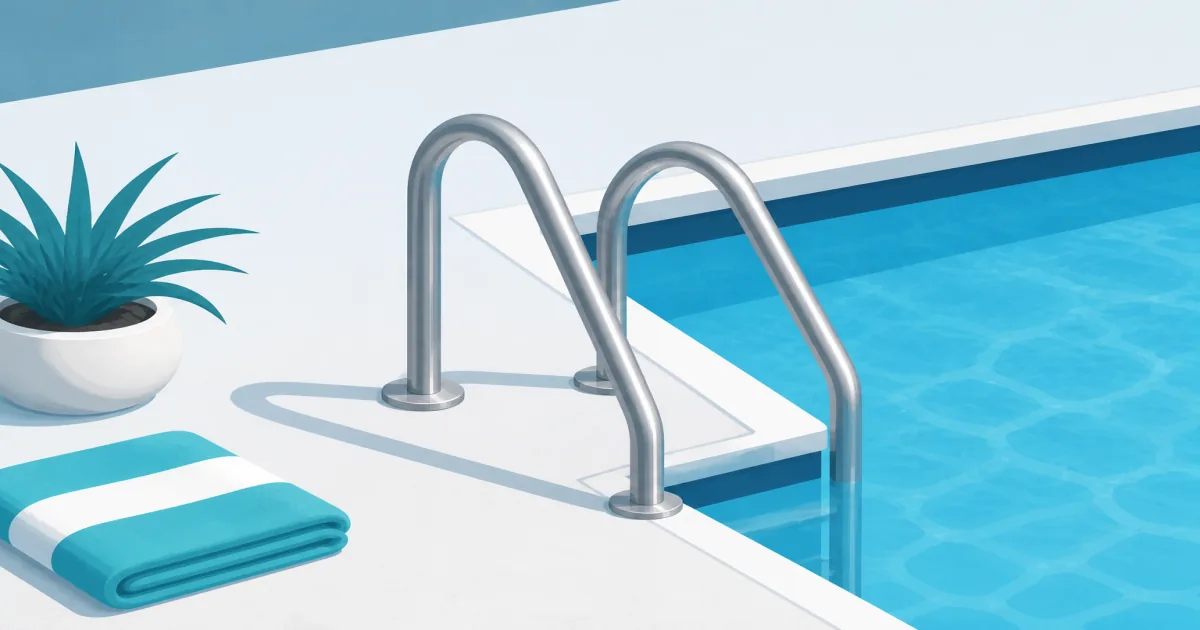
Pool Handrail (2026): 304 Stainless Sizes vs Bolt-On Rails
Accessories
A pool handrail steadies the climb into an in-ground pool. Match the bend size to your deck-to-water reach, then mount it so the grip does not wobble.
Our picks
A pool handrail is the quiet piece of hardware people notice only when it is missing. You reach for it every time you climb out after a long swim. The wrong size feels like grabbing air. The wrong mount feels like a wobbly towel bar.
Entry hardware lives in the broader accessories group with ladders, steps, and skimmer tools.
Measure the climb before you fall for a pretty brushed finish. Deck height, coping width, and whether the concrete can hold expansion anchors decide the shortlist. More backyard gear lives on the blog, and the homepage maps the rest of the site.
What a pool handrail actually does
If your yard still needs the climb structure itself, stay on the pool ladder guide. This page is for the grab rail that makes an existing in-ground entry feel trustworthy.
Comparison snapshot
Top pick: 30x22 304 stainless with cover
The 30x22 Pool Rail for Inground Pools is the default when the deck sits close enough to the water that a compact bend still lands in a natural hand path. 304 stainless handles poolside splash better than mystery plated tubes, and the cover softens the grip on hot afternoons.
Owners like this size because it does not stick out into the traffic lane like a longer rail. Skip it if adults have to lean awkwardly to find the bar. A rail that forces a stretch is the wrong footprint, not a bad brand story.
Best large reach: 39x32 304 stainless with cover
The 39x32 Pool Rail is for decks that sit higher or farther from the waterline. The longer arc gives adult grips a steadier first grab when the coping is not hugging the water.
It is overkill on a low deck where the compact rail already meets the hand. Extra length also means more visual presence on a narrow patio. Measure twice before you order the larger bend just because it looks more “pro.”
Best bolt-on: 31.5x31.5 expansion-screw rail
The Stainless Steel Pool Handrail with Expansion Screws aims at owners who do not have pre-embedded sleeves in the deck. The square 31.5x31.5 footprint and 330 lb class claim fit many concrete pads when the slab is thick enough for expansion anchors.
This is not magic hardware for crumbling patio edges. If the concrete is spalling or the deck is thin overlay, hire a pool builder to set proper mounts. A rail is only as strong as what it bites into.
Mount habits that keep it solid
Mark the hand path with a dry run before you drill. Have one adult climb out slowly and note where the hand naturally lands. That spot beats a brochure diagram.
Drill to the depth the anchors need. Blow dust out of the holes. Torque evenly so one side does not cock the rail. Recheck fasteners after the first week of swimming and again after the first big temperature swing.
Keep the area under the rail free of coiled hoses and skimmer nets. A perfect rail still fails the Saturday test if the first step is cluttered.
Chemistry and finish care
Balanced water protects stainless better than any polish spray. Wild pH and high metals leave stains that look like rust even when the rail is still sound. Pair chemistry checks with a pool thermometer habit if you already track temps weekly.
Rinse the rail after you dump concentrated chemicals nearby. Do not store rusty tools against it. Wipe the cover if sunscreen and body oils turn it sticky mid-summer.
When to skip these rails
Skip a deck-mount handrail if you only have an above-ground shell with no deck edge to bolt to. Skip expansion anchors on thin or damaged concrete. Skip any rail that blocks a safety cover track or a light niche you still need to service.
If the household needs gentler full-width steps instead of a single grab bar, shop step systems as their own category. A handrail helps balance. It does not invent treads.
Buying without brochure fog
Ignore lifestyle photos of empty resort pools. Confirm the bend dimensions in inches. Confirm 304 stainless if chemistry is chlorinated. Confirm whether a cover is included. Confirm mount hardware for your deck type.
If two listings look identical, match the published size to your tape measure, not to the thumbnail. A 30x22 and a 39x32 are not interchangeable just because both say stainless.
Frequently Asked Questions
Is a pool handrail the same as a pool ladder?
No. A pool ladder is the full climb path. A pool handrail is the grab bar that steadies entry and exit, usually on an in-ground deck edge.
What size handrail do I need?
Measure from the deck mount points to where a swimmer naturally grabs while climbing out. Compact 30x22 rails fit many low decks. Tall or deep edges often want 39x32 or a similar larger bend.
Stainless or aluminum?
304 stainless is the usual pool-chemistry choice for rails that live over chlorinated water. Keep chemistry balanced so the finish is not fighting constant metal staining.
Can I install it myself?
Surface-mount kits with expansion screws are more DIY-friendly than poured sleeves. Still check deck thickness, concrete condition, and local code. Wrong anchors are how rails loosen mid-season.
Does it help kids?
A solid rail helps smaller climbers steady themselves, but it is not a barrier system. Supervise entry the same way you would with any open pool.
Will it rust?
Quality 304 stainless resists poolside rust better than cheap plated steel. Rinse after splash-outs of concentrated chemicals, and do not leave wet metal tools leaning on the rail.
Where should it sit relative to lights and covers?
Keep the rail clear of pool lights niches and cover tracks. A rail that blocks a cover roller or a light bezel becomes a weekly annoyance.