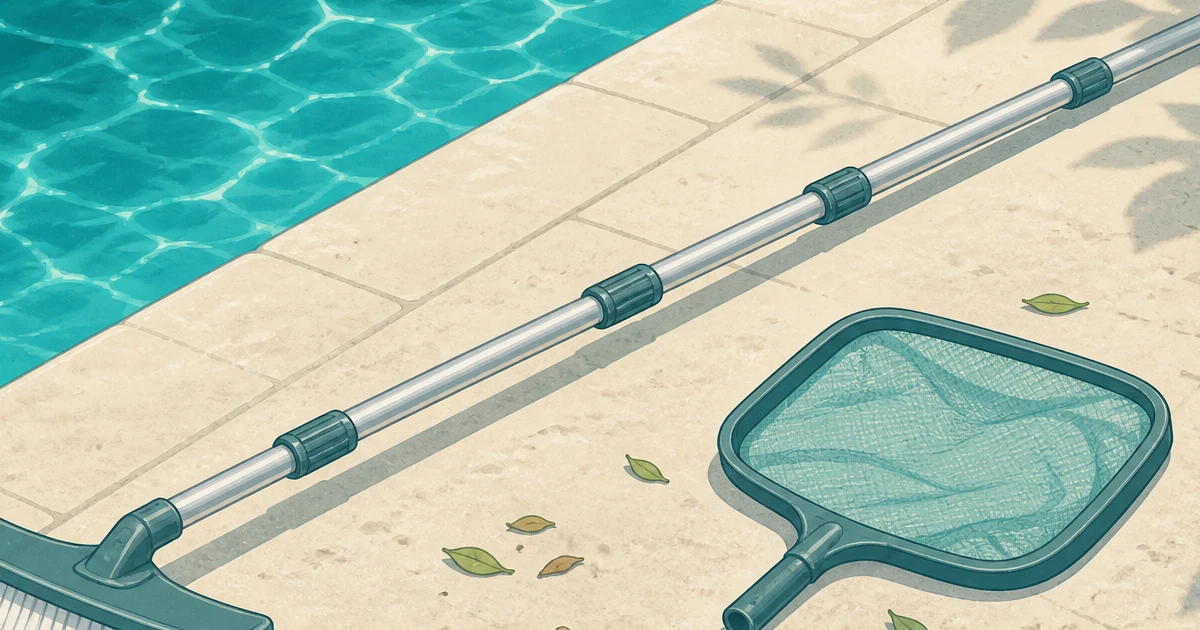
Pool Brush Pole (2026): Reach, Lock Fit, and Storage
Accessories
A pool brush pole only helps if it reaches the far wall and locks at length. Match the telescopic range to your pool, then clip on a brush that fits.
Our picks
A pool brush pole is only as useful as the reach and the lock behind it. A short pole leaves the center of the floor and the far wall out of reach. A pole that is too long is harder to control and takes up more room than it needs to. The pole is the part you will keep; the head is the part you replace when the bristles splay, so it pays to buy a pole with a standard end and a head that uses it.
Browse more pool accessories and start with the best pool brush pillar if you are still choosing bristles. More guides live on the blog, and the homepage maps the rest of the site.
How long a pool brush pole do you actually need?
Buy the shortest pole that reaches the spots you clean, with a little room to spare. A longer pole flexes more when you push a brush or a vacuum head.
Stand at the pool edge and picture brushing the center of the floor or the far wall. The pole needs to reach that point without making you lean so far that you lose control.
A 1.25 inch end, an 18 inch brush head, and about 2.7 to 10.5 feet of adjustment cover most home pools. Wider pools may want a 12, 15, or 16 foot pole, but check the flex before you buy the longest one in the aisle.
When should you step up to a longer pole?
When the far wall still feels unreachable and you find yourself overextending your body. Do not buy the longest pole by default; extra length flexes more under a brush.
Sepetrel 10.5 Foot Anodized Aluminum Pool Pole: the everyday pole
The Sepetrel 10.5 Foot Anodized Aluminum Pool Pole adjusts from about 2.7 to 10.5 feet. That range suits a typical home pool, and its standard-size end is meant for brushes, skimmers, rakes, and vacuum heads.
A telescopic pole lives around grit, chlorine water, and sun. Rinse the sections after use, especially around the cam locks, and let the pole drain before you collapse it. Hang it so water runs out of the tubes instead of pooling inside them, and skip leaning it against a hot fence where the aluminum cooks all afternoon. If a section starts to stick, clean it before you force it.
Sepetrel also sells wider-pool versions that run 3.4 to 12 feet and 3.4 to 15 feet, but the 10.5 foot model is the one that fits most backyards. The tradeoff is simple: it will not suit every pool. If the far wall still feels unreachable, move to a 12 or 15 foot model instead of overextending your body.
U.S. Pool Supply 18-Inch Pool Brush: the brush head
Clip the U.S. Pool Supply 18-Inch Pool Brush on for weekly wall and floor passes. The 5 rows of nylon bristles with slightly curved ends stay in contact on flat surfaces, and nylon is gentle enough for most vinyl and plaster pools.
If you are fighting heavy calcium on tile, you may want a stainless brush from the best pool brush guide instead of forcing nylon to do that job.
Nylon is the everyday bristle because it will not scratch a vinyl liner or a plaster wall, and the slightly curved ends keep a wider strip of the brush in contact with the surface as you move. That matters more than the row count when you are scrubbing a slope. If your waterline tile has hard calcium, a nylon brush will glide over it, while a stainless brush scrubs it off. That is why we keep those two jobs separate.
Which pole and brush should you buy?
Why does my telescopic pole keep collapsing?
The cam locks are loose, worn, or not fully closed, and grit in the sections is the usual cause. Clean the cams and check that no tube is bent before you blame the pole.
How do you keep the locks working?
Rinse chlorine water off the sections, let them drain for about 2 minutes, then collapse the pole. A dry, shaded spot helps it last. If a lock starts slipping, clean away the grit first and check that the cam is fully closed.
What should you not do with a pool pole?
Do not use it as a lever to pry equipment loose or drag a stuck cover. It is built to push a brush and guide a net, not to lift a heavy cleaner. Bent tubes and stripped cams come from leverage abuse, not normal brushing. Use a dedicated cover tool or a second pair of hands for a stuck cover, because a bent tube never un-bends. Replace the pole when it will not hold length under a normal brush load.
How do you brush a pool without stirring the water?
Work from the shallow end toward the deep end in slow, overlapping passes, and guide debris toward the main drain or toward the area you can vacuum.
Move slowly enough that you scrub the surface instead of just stirring water. Keep each pass about 3 feet wide and overlap the last one by half so you do not miss a strip. On a 20 foot home pool, that covers the wall in a few slow passes instead of a frantic scrub.
For leaves, attach a deep net rather than sweeping them with a wall brush. Our pool leaf rake guide explains why a deeper bag helps after a windy day. A best pool skimmer net on the same pole covers the surface between brush days.
Can the same pole run a skimmer net and a vacuum head?
Yes, if both use the same 1.25 inch clip. Check the connection on your vacuum head before you trust the fit, because a loose head pops off underwater and means pulling the hose and pole apart again.
Keep the matching brush clipped on or nearby so the next cleaning day does not start with a hunt through the shed.
Bottom line
Choose a pool brush pole for reach, attachment fit, and storage, in that order. The Sepetrel 10.5 Foot Aluminum Pool Pole plus the U.S. Pool Supply 18-Inch Pool Brush is a practical home-pool kit. Confirm the 1.25 inch connection, and step up to a longer pole only if you truly need it.
Frequently Asked Questions
What length pool pole do I need?
Choose a pole that reaches the center from the deck with some room to spare. A 10.5-foot pole works for many compact and medium pools. Wide pools may need 15 or 16 feet.
Do pool brushes use universal poles?
Many use the common 1.25-inch attachment end and EZ clip, but check both the brush and pole before buying.
Why does my telescopic pole keep collapsing?
The cam locks may be loose, worn, or not fully closed. Clean the sections, inspect the locks, and replace the pole if it cannot hold its set length.
Can I leave a pool pole outside?
A dry, shaded spot will help it last longer. Rinse off pool water and avoid leaving a telescopic pole sitting in wet grass or standing water.
Should I buy a longer pole “just in case”?
Usually no. Extra length flexes more when you push a brush or vacuum head. Buy the shortest length that reaches the spots you clean.
What brush goes on a pool brush pole?
An 18-inch nylon wall brush is the everyday choice for most home pools. See our best pool brush guide if you need stainless bristles for stubborn tile scale.
Can the same pole run a skimmer net?
Yes, if the net uses the same 1.25-inch clip. That is why a telescopic pole is worth keeping.