Best Pool Brush (2026): Nylon Wall Heads vs Tile Scrubs
Accessories
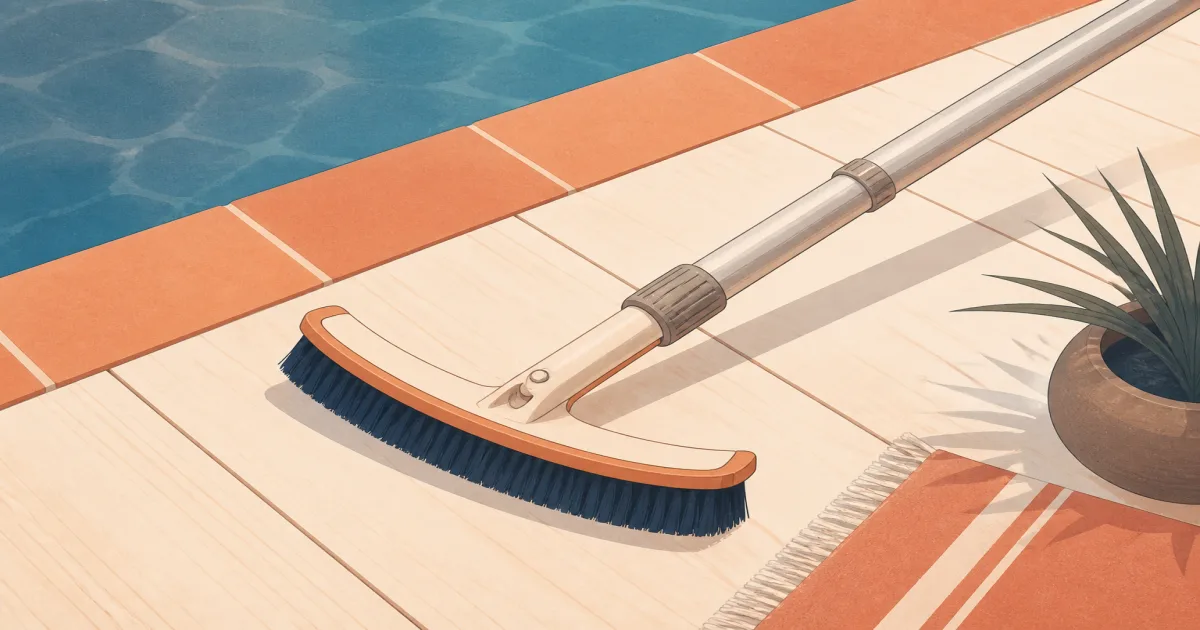
The best pool brush is usually an 18-inch nylon head on a solid telescopic pole. Save specialty tile and algae brushes for the jobs nylon cannot finish.
Our picks
People search for the best pool brush after the waterline turns fuzzy or the floor feels slick underfoot. Robots help, but a brush is still the tool that knocks film loose before filtration can catch it. The 18-inch nylon head on a 16 ft pole is the pair that does most of the work; a stiffer aluminum-back head is the upgrade when the film is stubborn.
This guide lives under accessories with the best pool skimmer pillar. It builds a simple kit: nylon head for daily use, a pole that reaches the deep end, and a stiffer head when you need more bite.
What is the best pool brush for most pools?
An 18-inch nylon head on a 16 ft telescopic pole. Nylon is safe on vinyl, plaster, and fiberglass, the 18-inch width cuts pass count on long walls, and the pole reaches the deep end. Add a stiffer back only when the film is stubborn.
Why 18 inches is the width that pays off
A 16 ft by 32 ft pool has about 96 linear feet of wall. An 18-inch head covers a wall run in roughly 6.5 passes, while a 10-inch spa head takes about 49. That is the whole argument for width: same scrubbing, a fraction of the laps. The tradeoff is that a wide head is clumsier in tight corners, which is what the small heads are for.
Is nylon or stainless steel right for your surface?
Nylon is the default for vinyl liners and routine maintenance on any surface. Stainless steel is for plaster or concrete only, when green algae needs a stronger scrub. Steel on a vinyl liner will scar it, and that damage does not come back.
If you are unsure, buy nylon first. You can add a specialty algae scrub later. Going steel-first on the wrong surface is an expensive mistake.
Top pick: U.S. Pool Supply 18-inch nylon head
The U.S. Pool Supply 18-Inch Pool Brush is the everyday head. Eighteen inches covers wall runs faster than a narrow spa brush. The aluminum-reinforced back keeps the head from bowing away from the wall, which is the difference between the pressure reaching the bristles and the brush skating over the film. It holds a 4.4-star average across 1,023 ratings.
Why the head alone is not the purchase
Owners like the price and the "just works" feel. The head alone is useless without a pole, so budget for both. Snap it on, brush the waterline in overlapping passes, then do the floor seams where dust settles.
Who should skip it
Skip it if you want a single brush that also handles deep algae on plaster. That job wants a stainless head or a dedicated pool algae brush, not a nylon wall brush.
Best pole: SKIMLITE Snaplite 16 ft telescopic
The SKIMLITE Snaplite Telescopic Pool Pole (16 ft) is the matching handle for most snap-adapt tools. It extends to 16 feet for the deep end and collapses for shed storage, and the universal threaded adapter fits common brush and net heads. It holds a 4.6-star average across 215 ratings.
What the decagon shaft actually changes
The decagon shaft is the detail that stands out. It resists twisting under load, so a brush head stays square to the wall instead of spinning as you push. A round pole with a friction cam is where the head starts rotating mid-pass. A push-button lock sets the length, and a built-in stop keeps you from over-extending the sections.
What pole diameter does an EZ clip head need?
Standard pool accessory poles are 1-1/4 inch in diameter, and EZ clip heads are built for that. A head that will not seat is usually a pole-size mismatch, not a defective clip. Check the diameter before you blame the brush.
Do not use the pole as a pry bar on stuck drains or heavy leaf mats. Even a strong pole bends when you lever sideways. If a clump will not move, scoop with a deep leaf net instead of forcing the brush.
Best stiff-back head: Swimline Hydrotools 8220
The Swimline Hydrotools 18-Inch Aluminum-Back Nylon Brush is the upgrade when the deluxe molded head feels too soft on stubborn film. The aluminum back keeps the head from flexing as much on long wall passes, and the curved ends follow the wall-to-floor transition rather than fighting it. The model 8220 ships at about 0.9 lb and holds a 4.3-star average across 1,138 ratings.
When a stiffer back is worth it
It is still nylon, so it stays safer than steel on many surfaces. Save true stainless algae brushes for plaster jobs where you have already confirmed the finish can take metal bristles. That specialty job is covered on pool algae brush.
What working pool techs actually use
The r/pools crowd is blunt about this: "there isn't one brush that will do it all." Working techs who brush 18 to 22 pools a day name the Oreq Animal 22-inch as the shop favorite and replace it about once a season. Most keep three tools: a wide nylon head, a straight steel head for stubborn areas, and small heads for corners.
Wall brush versus tile brush versus algae brush
A wide nylon head is for walls and floors. The greasy or chalky tile band often needs a shorter scrubber from the pool tile brush guide, sometimes with a pool tile cleaner.
Use both if your pool has real tile. Do not force an 18-inch wall brush into a job a flip scrubber finishes in half the time.
How often should you brush a pool?
Two to three times a week in swim season is a solid habit. Brush before you vacuum or run the robot, so debris is suspended for the filter instead of settling back on the floor. After a party or a windy day, brush once more.
How to brush so the robot can finish
Brushing works best in a set order.
- Skim floating leaves first.
- Brush the waterline and walls downward.
- Brush the floor toward the main drain or the robot's usual path.
- Run filtration or drop in your cleaner.
If you brush and walk away with the pump off, debris resettles. Give the system a chance to catch what you loosened. For autopilot after the scrub, see best robotic pool cleaner. For sand pockets, keep a best pool vacuum handheld nearby.
Stand with a slight bend in the knees and keep the pole close to your body. Long, controlled passes beat frantic scrubbing. In corners, shorten the pole. Full extension looks dramatic and cleans poorly. If the brush chatters or skips, you are moving too fast or the bristles are loaded with hair and leaves. Rinse the head in the pool, shake it out, and continue.
For steps and benches, use short strokes and watch for slick algae patches. Those spots are where people slip. A two-minute focused scrub there is worth more than ten lazy wall passes.
Storage and lifespan tips
Rinse chlorine and sunscreen gunk off the bristles after heavy weeks. Hang the pole so water drains out of the sections instead of pooling in the lock. Cam locks and push buttons last longer when they are not packed with grit.
When is a brush head worn out?
Replace a head when the bristles splay flat or the snap buttons go mushy. A dead head scratches more than it cleans because the splayed nylon no longer reaches the film. Keep a spare nylon head in the shed if your season is long and leafy.
Bottom line
Start with the U.S. Pool Supply 18-inch head and the 16 ft SKIMLITE pole. Add the aluminum-backed head when the film is stubborn. Keep tile and algae scrubbers in their own lanes so one kit does not try to do every surface badly. The best pool brush is the one you will actually clip on twice a week.
Frequently Asked Questions
What is the best pool brush for weekly cleaning?
For most yards, the U.S. Pool Supply 18-Inch Pool Brush on the SKIMLITE Snaplite Telescopic Pool Pole (16 ft) is the best pool brush kit. Add the aluminum-backed head when film needs a stiffer push.
Is nylon or stainless better for a pool brush?
Nylon is the default for vinyl liners and routine maintenance. Stainless steel algae brushes are for plaster or concrete when green slime needs a stronger scrub. Do not put steel on a vinyl liner. See pool algae brush.
Do I need a brush if I own a robot?
Often yes. Robots miss the waterline scum band and corners after parties. A quick brush pass before a robotic cleaner cycle helps suction pick up what you knock loose.
When should I buy a pool tile brush instead?
When the problem is the waterline tile ring, not the big walls. A dedicated pool tile brush scrubber fits that band better than an 18-inch nylon wall head.
What length pole should I buy?
Match the deep end. Most homeowners do fine with a 16 ft telescopic pole that collapses for storage. If the pole feels whippy at full extension, shorten it and take two passes instead of forcing leverage. More detail in pool brush pole.
How often should I brush?
Two to three times a week in swim season is a solid habit. Brush before you vacuum or run the robot so debris is suspended for the filter.
Can one brush head do walls and floor?
Yes for light film. Curved ends help the wall-to-floor joint. For heavy floor sand, a pool vacuum or robot still wins.
Should I buy a brush and skimmer together?
Yes. Brushing without skimming just redistributes leaves. Pair this kit with the best pool skimmer setup.