How to Use a Pool Filter Cleaner (2026): Soak First, Then Rinse Pleats
Water care
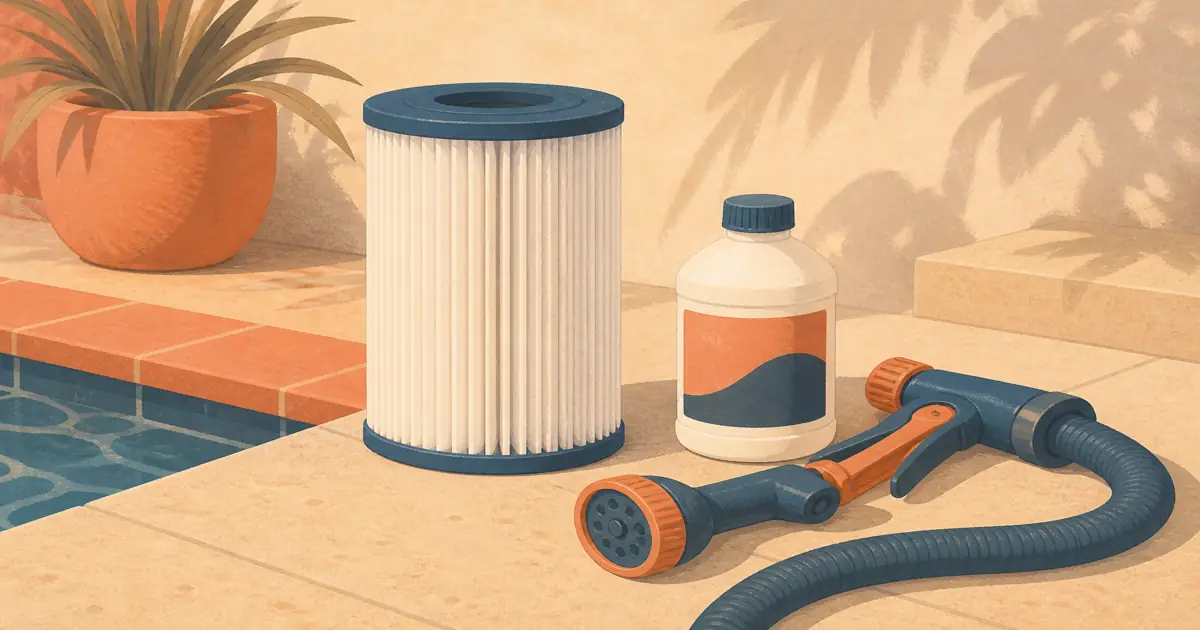
A hose blast only moves the easy dirt. Soak the cartridge in a real pool filter cleaner, then rinse the pleats so the filter can actually flow again.
Our picks
A dirty filter makes every other pool job harder. Chlorine works slower. The pump sounds louder. The robot leaves cloudy water behind. People buy more chemicals when the real problem is a cartridge packed with sunscreen, oils, and fine silt.
Filter cleaning belongs with the water care guides on media, pressure, and backwashing.
A pool filter cleaner is the soak that cuts that film. A hose tool is the rinse that gets between pleats without shredding them. Use both. Notes here come from product directions and owner reviews. We did not time pressure-drop tests on a lab filter for this article.
Know your filter type before you buy
Cartridge filters are the usual backyard setup. You shut the pump, open the tank, and pull one or more pleated cartridges. Those are the ones this kit is built for.
Sand filters get a soak through the skimmer while the valve is set for dwell, then a long backwash. DE grids can soak in a tub the same way cartridges do.
If you are not sure which you own, look at the tank. A clamp-top canister with a white accordion cylinder is a cartridge. A multiport valve on a round tank is usually sand or DE.
Step 1: Take it apart without wrecking the o-ring
Turn the pump off. Close valves if your plumbing has them. Relieve pressure at the air relief, then open the tank.
Pull the cartridge straight up. Set the tank o-ring somewhere clean and shaded so it does not bake into a pretzel. A dry, cracked o-ring is how people create a leak they blame on the cleaner.
Dump loose debris into the trash, not back into the pool. Hair and leaves do not belong in the soak bucket.
Step 2: Soak with Natural Chemistry Filter Perfect
The Natural Chemistry Filter Perfect (2-Pack) is the soak we recommend for a first deep clean. It is acid-free, so you are not standing over a fuming bucket. The job is oils, grease, and organic film that a hose never touches.
Use a trash can or a dedicated tub. Mix one liter into several gallons of water per the label. Submerge the cartridge and leave it for at least six hours. Overnight is better.
Sand-filter owners follow the bottle’s dwell-in-place method instead of yanking media. Do not invent a shorter soak because you are in a hurry. The chemistry needs time.
Step 3: Rinse pleats with the Filter Flosser
After the soak, rinse until the water runs clear. A garden hose alone misses the inside of the folds. The Filter Flosser Cartridge Cleaning Tool threads onto a standard hose and fans water across the pleats.
Use the vertical and horizontal patterns. Work around the cylinder. Keep the pressure on “garden hose,” not “pressure washer.” You want dirt out of the fabric, not holes in it.
This tool does not sanitize the cartridge. It removes what the soak loosened. That is why it is kit item 2, not a substitute for item 1.
A simple seasonal schedule
Hose-rinse whenever the pressure gauge is 8 to 10 psi above clean, or when returns feel weak. Do the soak two to four times during swim season, plus once at opening.
If you host a lot of sunscreen-heavy afternoons, add a soak. Oils are the quiet reason cartridges look “clean” and still choke flow.
Replace the cartridge when the pleats stay crushed, the end cap wiggles, or cleaning no longer drops the pressure. Cleaner is cheaper than a new cartridge. It is not cheaper than pretending a dead one still works.
What this kit will not fix
A filter cleaner will not clear green water by itself. Algae still needs sanitizer and, when the bloom is real, a dedicated pool algaecide. The filter just has to be able to catch what you kill.
It also will not fix a failing pump, a clogged impeller, or a skimmer full of last week’s oak leaves. Clean those first. Then clean the cartridge so you are not diagnosing three problems at once.
Keep a best pool test kit next to the soak bucket. After you reinstall the filter, run the pump and test. You want normal chlorine and pH, not leftover cleaner residue guessing for you.
Week-one routine if you have never done this
Buy the soak and the hose tool before the cartridge is desperate. Mix the soak in the evening. Rinse in the morning. Reassemble, restart the pump, and write down the clean pressure on a piece of tape on the tank.
That number is your baseline. Next time the gauge climbs, you will know it is time to rinse, not time to dump more chlorine into cloudy water.
If the water is still cloudy after you clean
Give the pump a few hours. A freshly rinsed cartridge can throw a little haze while leftover cleaner and loosened silt move through.
If the gauge is back to the clean number and the water is still dull the next day, the filter is not the only problem. Test sanitizer and pH. Brush the walls. Check that the multiport valve is actually on filter, not a half-seated backwash. Then look at algae with a pool algaecide plan if color is the issue.
A pool filter cleaner restores flow. It does not invent missing chlorine. When rinsing no longer brings pressure down, replace the element with a matching pool filter cartridge instead of another soak.
Frequently Asked Questions
How often should I use a pool filter cleaner?
Hose-rinse when pressure rises or flow drops. Do a chemical soak a few times a season, or after a heavy sunscreen and party week.
Can I pressure-wash a cartridge?
Skip it. High pressure tears pleats. Use a garden hose and a tool like the Filter Flosser, then soak if the cartridge still looks greasy.
Does this work on sand filters?
Yes. Natural Chemistry Filter Perfect has a sand-filter dwell method. Follow the bottle, then backwash until the water runs clear.
Will cleaner replace new cartridges?
No. Once the fabric is crushed or the end caps leak, buy replacements. Cleaner restores flow. It does not rebuild a dead cartridge.
Do I need to rebalance the water after cleaning?
Rinse the cartridge well before you reinstall it. Then test chlorine and pH with a best pool test kit so leftover cleaner is not guessing for you.
What if algae keeps coming back?
A dirty filter helps algae hide. Clean the media, then treat the water. See our pool algaecide guide for the chemistry side.