Best Pool Test Kit (2026): Taylor K-2006 vs Test Strips
Water care
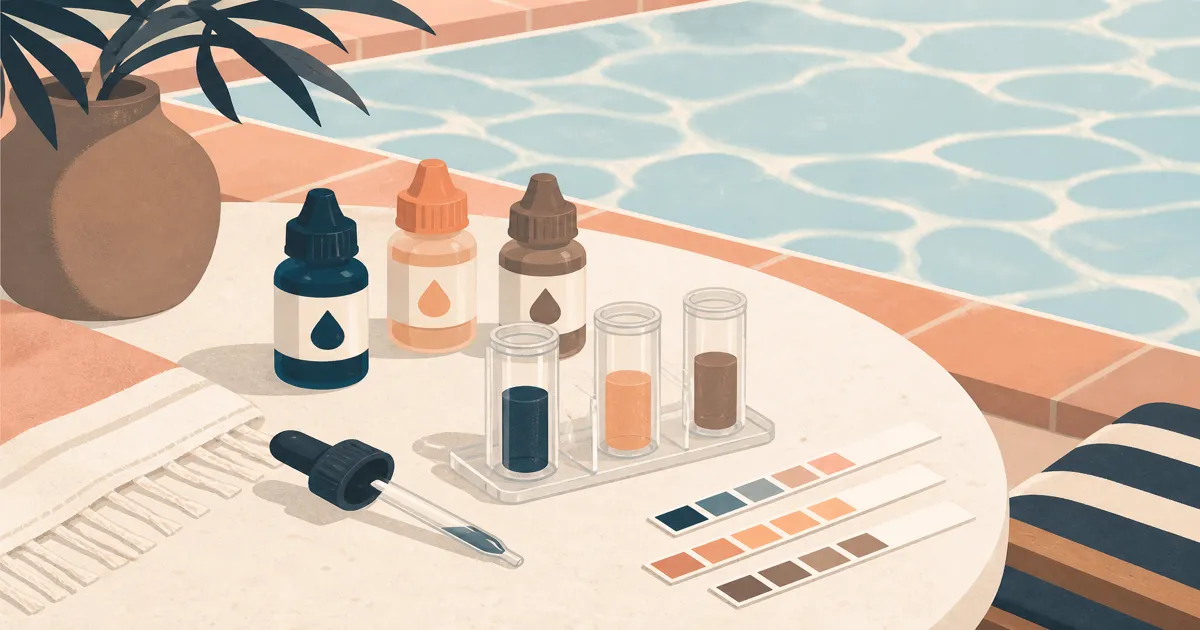
Best pool test kit setup for most homeowners is a Taylor K-2006 drop kit for real decisions, paired with HTH 6-way strips for fast midweek dips. Refresh the reagents once a season and the numbers stay honest.
Our picks
Cloudy water is rarely a mystery. It is usually chemistry that drifted while everyone was busy swimming. The best pool test kit is the one you will actually use before you dump more chlorine into a pool that needed acid instead. For most homeowners, the answer is a Taylor K-2006 drop kit for the numbers that drive decisions, paired with cheap strips for fast midweek dips.
This guide is the water care section entry point for testing. For saltwater-specific testing, see the best saltwater pool test kit guide. For the broader deck kit, see the pool skimmer guide.
Which type of test kit is most accurate?
Drop-titration kits are the most accurate, strips are the fastest, and digital readers sit in the middle. The drop kit wins because it measures free chlorine by counting drops instead of matching a color patch, and it separates free from combined chlorine. Strips cannot do that.
If you only own one, own a drop kit. If you only own two, add strips. A digital reader is a third tool for owners who already run weekly drop testing and want a continuous read between sessions.
Why does free versus combined chlorine matter?
Free chlorine is the chlorine still able to sanitize. Combined chlorine is what is left after it has already reacted with sweat, sunscreen, and other organics, and it is what causes the "chlorine smell" people blame on too much chlorine. A strip pad shows both the same way, so a pool with a high combined reading looks fine while it is not. The FAS-DPD test in a drop kit splits the two numbers apart, which is the difference between shocking correctly and shocking blindly.
Can a strip tell me my cyanuric acid?
Only loosely. CYA on a strip is a rough band, and CYA is the number that quietly ruins everything when it climbs, because high stabilizer locks up free chlorine and makes the pool behave like it has none. The drop kit's disappearing-dot test is far more repeatable, so use strips for a midweek direction and the drop kit monthly for the real number.
Hero pick: Taylor K-2006 Complete Test Kit
The Taylor K-2006 is the homeowner standard for accurate backyard pool testing. FAS-DPD titration measures free chlorine and combined chlorine to within about 0.2 ppm, which is finer than any color comparator on a strip. The same case includes drop tests for pH, acid and base demand, total alkalinity, calcium hardness, and cyanuric acid, which covers every number a backyard pool actually needs.
Owners who switch from store-only testing usually say the same thing: their own kit ends the back-and-forth advice. The cost is time. You will stand at a table for several minutes, count drops, and write numbers down. That is the point. Slow testing beats fast guessing.
How do I budget reagents for a season?
Work the math before you assume refills are a money pit. Taylor dropper tips dispense about 25 drops per milliliter, so a 0.75 oz bottle covers roughly 110 tests at 5 drops each, and a 2 oz bottle about 300. A weekly drop test plus a couple of midweek checks is roughly 60 to 80 tests across a season, which means one small bottle of the chlorine titrant lasts about one summer.
What does the alkalinity test actually do?
It uses a shortcut worth knowing, because the test runs long when people miss it. Add 1 drop of R-0007 for every 2 drops of R-0871 you used in the free-chlorine test, then 5 drops of R-0008, then titrate with R-0009 to the pink endpoint. Alkalinity is the number that keeps pH from bouncing, so it is the one to fix before you chase a drifting pH with acid all week.
How do I read cyanuric acid correctly?
Fill the mixing bottle to 7 mL of pool water, add R-0013 to the 14 mL mark, cap it, and mix gently for 30 seconds. Pour into the small comparator tube until the black dot at the bottom disappears. That last step is why lighting matters so much. Do it in shade, at roughly eye level, and take the reading the moment the dot goes, not after a second look.
Midweek companion: HTH 6-Way Pool Test Strips
HTH 6-Way Pool Test Strips cover free chlorine or bromine, pH, alkalinity, hardness, and CYA in a single dip. They earn a spot in the kit because they are fast enough to use more often. A weekly drop test plus a midweek strip scan catches drift before it turns into a chemical purchase.
The downside is color matching. Pads bleed into each other, and outdoor lighting shifts through the day. Keep the bottle dry, cap it immediately, and compare colors in shade. A strip that says pH 7.8 at noon in direct sun may read 7.6 under a porch light five minutes later.
Digital reader as a third tool
A digital pool reader like the WaterGuru Sense or pHin sits in the skimmer and reports pH, free chlorine, ORP, and temperature to a phone app. The honest limits are cost and chemistry coverage, since most units do not measure calcium hardness or cyanuric acid. For saltwater pools, the Taylor K-1766 adds salt and borate tests to the same drop workflow.
What is a simple weekly routine that sticks?
Test in shade or in the evening, record the same three numbers every week, and change one thing at a time. That routine catches drift before it costs money, and it takes less time than a trip to the pool store for a water sample.
- Test in the evening or shade so colors read honestly. Sun glare and porch lights both distort pads.
- Record free chlorine, pH, and alkalinity every week. A notes app with the date beats any photo.
- Check CYA monthly in summer, or sooner if you use stabilized trichlor tablets heavily.
- Adjust one thing at a time, then retest. Chasing three numbers at once loses the cause.
- Brush and clean after chemistry is close, not before. Debris skews readings.
If chlorine will not hold, look at CYA and sunlight load before you blame the feeder. CYA above about 80 ppm binds free chlorine. A drop kit reads through the CYA haze. If pH keeps climbing, check aeration features and alkalinity before endless tiny acid doses that never stick.
Which mistakes waste the most chemicals?
Testing right after dosing wastes the most, followed by expired reagents and reading strips under warm indoor light. Every one of those wastes chemicals and gives you numbers you cannot trust. Wait for circulation, use fresh reagents, and read colors in daylight.
A clear pool is chemistry plus circulation plus physical cleaning. The test kit handles the first job. Leave debris to a robot or vacuum so you are not mistaking dirt for a chemistry failure. If pressure is high, use a pool filter cleaner soak before you keep adding sanitizer. If color remains after chlorine is back, see the pool algaecide guide.
Bottom line
If you want the best pool test kit for real decisions, start with the Taylor K-2006. Add HTH 6-Way Pool Test Strips so you actually test between weekends, and refresh the reagents once a season so the numbers stay honest. Consider a digital reader only when you want continuous data and do not mind the higher upfront cost. Accurate numbers save more money than any fancy feeder, and they make cleaner cycles more effective because the water is ready to stay clear.
Frequently Asked Questions
What is the most accurate way to test pool water?
Drop-titration kits like the Taylor K-2006 are the most accurate backyard option for free chlorine, combined chlorine, pH, alkalinity, calcium hardness, and cyanuric acid. FAS-DPD titration measures free chlorine to within about 0.2 ppm. Strips and digital readers are useful for quick checks, but test with the drop kit before any acid, chlorine, or calcium decision.
What pool test kit should I get?
For a backyard chlorine pool, start with the Taylor K-2006 for the numbers that drive chemical decisions. Add HTH 6-Way strips for fast midweek dips. If you have a saltwater pool, the Taylor K-1766 adds salt and borate tests to the same workflow.
How long do pool test kit reagents last?
Taylor formulates reagents to stay effective for at least one year, and the company's own guidance is to replace anything older than a year or refresh the set at the start of a new season. R-0003 should be colorless and turns increasingly yellow as it degrades, and the FAS-DPD titrating reagent does the same.
How many tests do I get from one reagent bottle?
Taylor dropper tips dispense about 25 drops per milliliter. A 0.75 oz bottle therefore covers roughly 110 tests at 5 drops each, and a 2 oz bottle about 300. For a weekly-plus-midweek routine, one small bottle is roughly one season.
How do I convert drops to free chlorine ppm?
Use the 10 mL sample, add two level scoops of DPD powder, then add the titrating reagent one drop at a time, swirling, until the pink clears. Multiply the drop count by 0.2 to get free chlorine in ppm. Adding 5 drops of R-0003 after that turns the sample pink again if combined chlorine is present.
What is the most accurate pH tester for pool water?
A phenol red drop test, as in the Taylor K-2006, is the most accurate backyard pH tester. Strips sit a step below for pH because the color block is read against outdoor lighting that drifts through the day. Digital pH probes can match drops if you keep the probe wet and recalibrate monthly.
Which water test kit is the most accurate overall?
For free chlorine and combined chlorine, FAS-DPD titration in the Taylor K-2006 is more accurate than any strip or color comparator. For pH and alkalinity, the same drop kit is more accurate than any 6-way strip. For cyanuric acid, the disappearing-dot test in the K-2006 beats every strip on the market.
Are pool test strips enough on their own?
For a quick midweek scan, yes. For decisions that cost money (acid, chlorine, calcium), confirm with the drop kit before you buy chemicals. Strips drift in odd lighting and pad bleed can mislead on borderline readings.
How should I store reagents and strips?
Cool, dark, and sealed. Replace expired bottles. Heat-soaked reagents and damp strip bottles lie to you. A yellowed R-0003 bottle makes a good kit give bad numbers.
Do I still need a cleaner if chemistry is perfect?
Yes. Balanced water does not vacuum leaves. Pair testing with a cleaner from best robotic pool cleaner or best pool vacuum, and skim with a best pool skimmer net between cycles.