Pool Return Jet: How to Choose a Replacement Fitting
Accessories
A pool return jet replacement needs to match your wall fitting and hose size, not just look similar in the product photo. Shut down the pump before opening it.
Our picks
The return jet is the fitting that sends filtered water back into the pool. It looks simple, but a cracked body or a bad gasket can cause a slow leak that gets worse every time the pump starts. This guide covers the two complete above-ground kits we would buy today, how to match the fitting to your pool, and how to aim the eyeball so the water actually moves.
Return fittings belong in the accessories lane with the best pool skimmer pillar. Start by matching the wall opening, hose diameter, and thread, because a kit that looks right in a photo can still be the wrong nut on your pool.
What does a pool return jet do?
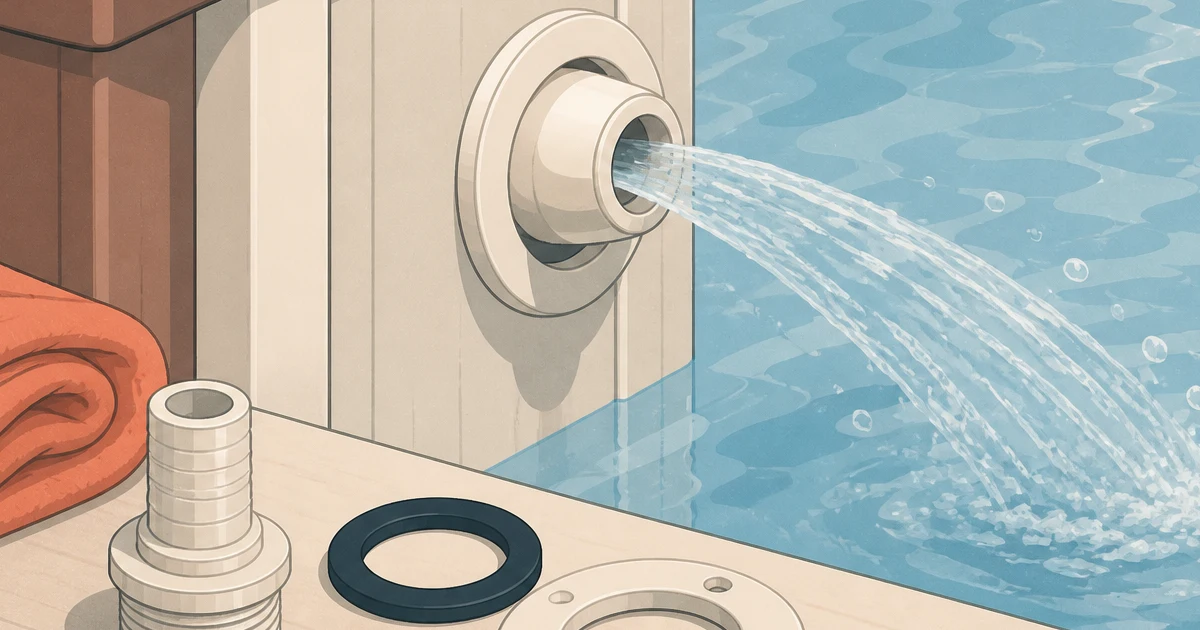
A return jet pushes filtered water back into the pool, and its direction sets how the surface and the deeper water move.
An above-ground return assembly commonly includes a wall fitting, gasket or gaskets, locknut, directional eyeball, hose adapter, and clamp. Some kits include every part. Others include only the eyeball or one side of the fitting, which is how a simple replacement turns into three orders.
What is the difference between a return jet and a skimmer?
A skimmer pulls water toward the pump; a return sends filtered water back out. Both must seal, but their parts are not interchangeable.
Above-ground returns usually pair a 1.5 inch wall opening with either a 1.25 inch or a 1.5 inch hose, and the eyeball outlet is often 3/4 inch. A complete kit should include 2 or 3 gaskets so one can sit on each side of the wall panel, plus a clamp for the hose.
Do not order from the front view alone. Measure the wall opening, note whether the existing hose is 1.25 or 1.5 inches, and take photos from inside and outside the pool. If your pool has a brand-specific fitting, find the model in the manual before choosing a generic kit. If you can only reuse 1 gasket, order the kit before you open the line.
FibroPool Above Ground Pool Return Jet Kit: the complete kit
The FibroPool Above Ground Pool Return Jet Kit includes a directional eyeball, wall fitting, three gaskets, hose adapter, clamp, and thread tape. It is the sensible pick when you need the whole assembly rather than one replacement piece.
The three-gasket set is the main reason to choose it. A single pinched gasket is the most common cause of a weeping fitting, and having spares on the deck means you are not driving to a pool store mid-repair.
ATIE SP1023: the standard-opening replacement
The ATIE SP1023 Above Ground Pool Complete Return Outlet Jet Fitting is another full kit for many pools with a standard pre-cut wall opening. It has the familiar eyeball, locknut, gaskets, and adapters for 1.25-inch and 1.5-inch hoses, with a 1.5 inch FIP inlet that matches Hayward SP1023-compatible systems.
If the old fitting is cracked, keep it until the replacement arrives. It is the best reference for the opening size and thread position. Take a photo of the old eyeball angle before you remove it too, so you can copy the aim on day one.
Which return jet kit fits your pool?
How do you aim the eyeball for real circulation?
Point every eyeball the same way along the wall and tilt it about 10 to 15 degrees downward, so the pool makes one slow rotation that pushes debris toward the skimmer. A 1.5 inch inlet, a 3/4 inch eyeball, and a 1.25 inch hose adapter are the three numbers that decide whether a kit fits and how hard the return pushes.
Which way should the eyeball point?
Aim it slightly down and along the wall in the direction of your skimmer. That builds a slow current across the surface and keeps deeper water moving instead of only churning the top inch.
What happens if you aim every jet at the skimmer?
Newly returned water gets pulled right back out, so the far side of the pool goes stale and collects debris. Aim for a loop, not a straight line.
A pool turns its water over roughly every 6 to 8 hours, so the return has to keep the whole volume moving, not just the surface. Run the pump at least 12 hours a day in swim season, and give a freshly installed fitting about 30 minutes of runtime before you call it sealed.
Good circulation supports the filter, but it does not replace chemistry. If your water is cloudy or green, test it first and follow a measured treatment plan. A strong return jet cannot solve algae by itself. Once the fitting is solid, a pool fountain can share that return path for spray nights if your pump has the flow.
How do you replace it without a leak?
Switch off the pump, confirm the kit matches, seat each gasket flat, and tighten the locknut evenly instead of leaning on one side.
Turn the pump off at the breaker or timer. Close valves if your system has them. Do not loosen a fitting with the pump running or while the plumbing is pressurized.
Can you replace it with the pool full?
That depends on your pool and fitting. Some above-ground pools can be plugged and serviced, but follow your manual rather than improvising around a pressurized line.
Some owners use winterizing plugs or lower the water below the return. If the liner or plumbing layout makes you unsure, a pool service technician is cheaper than fixing a damaged liner. Clean the wall surface before fitting new gaskets, put each gasket where the maker shows, and avoid overtightening plastic parts. A twisted gasket can leak even if the nut feels extremely tight.
How do you find a small leak after startup?
Run the system, then press a dry paper towel along the outside wall fitting, the hose connection, and the inside gasket area. A weep shows up as a damp spot before it becomes a wet patch.
If it leaks, stop the pump and inspect the gasket placement. Do not keep tightening one side of a plastic locknut until it cracks. A clean, even seal beats brute force. Also check the hose for soft spots, cracks, and a loose clamp; if the hose itself is old, see our pool vacuum hose guide for the common sizes and replacement checks.
Bottom line
Replace a pool return jet with a kit that matches your wall opening, hose size, and pool type. The FibroPool and ATIE SP1023 kits are strong options for compatible above-ground pools. Shut off the pump, seat the gaskets carefully, aim the finished jet slightly down and around the pool, and check for leaks before you walk away.
Frequently Asked Questions
What does a pool return jet do?
It sends filtered water back into the pool. Its direction affects surface movement and how well the water circulates.
Can I replace a return jet with the pool full?
Some above-ground pools can be plugged and serviced, but the safe method depends on the fitting and pool. Follow your manual and do not improvise around a pressurized line.
Why is water leaking around my return fitting?
A loose nut, pinched gasket, cracked fitting, or wrong-size replacement can all cause a leak. Inspect each part before tightening.
Which way should I point the return jet?
Aim it slightly downward and around the pool to encourage circulation. Avoid pointing it straight at the skimmer or directly at a wall.
How do I know which return jet kit fits my pool?
Match the wall opening, hose diameter, threads, and pool type before you crack the line. A kit that looks right in a photo can still be the wrong nut on your pool.
What is the difference between a return jet and a skimmer?
A skimmer pulls water toward the pump, and a return jet sends filtered water back out. Their parts are not interchangeable, but both need to be sealed.
Can I use a pool fountain with my return jet?
If your pump has the flow, a pool fountain can share the return path for spray nights. Check the fitting and circulation before adding one.