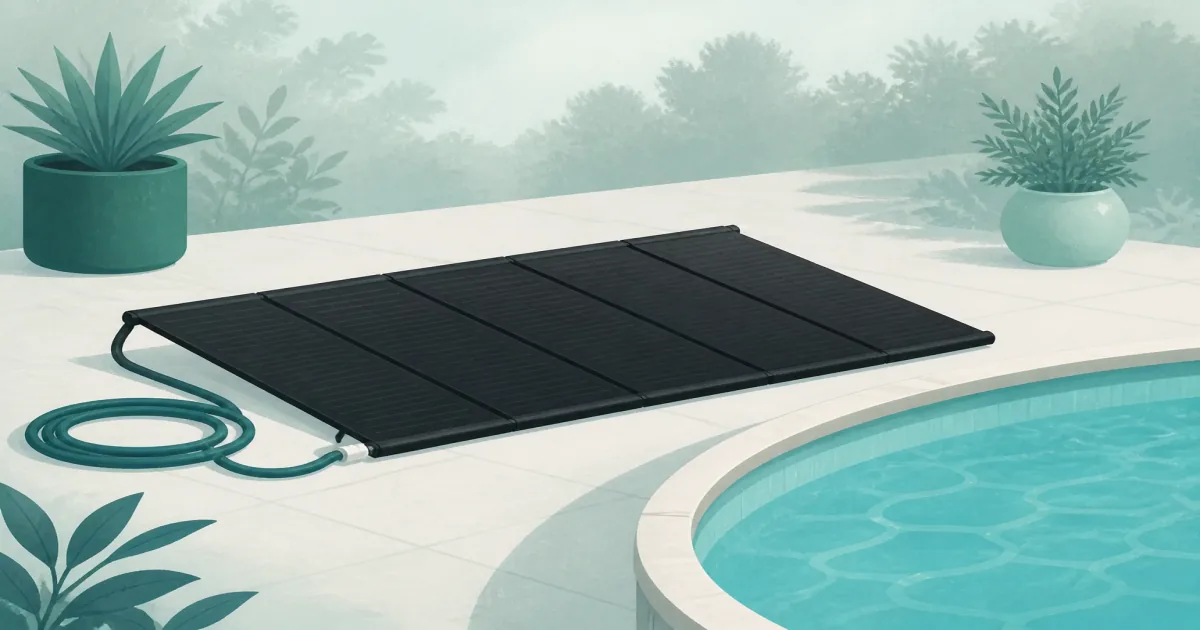
Pool Solar Heater (2026): Panel Kits That Warm Water Without Fuel
Accessories
A pool solar heater uses your existing pump to push water through sun-heated panels. Size the collector area to the pool, then pick above-ground or roof kits.
Our picks
A pool solar heater is the unglamorous way to stretch the swim season: black collectors, your existing pump, and enough sun between late morning and mid-afternoon. It is not a gas heater you fire for a party. It is a daily top-up that works best when you size the collector area honestly and keep heat in overnight with a cover.
Solar heating belongs with the accessories pad equipment and the best pool skimmer pillar.
If you only want a bubble blanket, stay on the solar cover guide. This page is for active panel heating. More pad and water-care reads sit on the blog, and the homepage maps the rest of the site.
Solar heater vs solar cover vs heat pump
Owners who buy panels and skip a cover often say “solar does nothing” after cool nights. The panels worked. The pool just dumped the BTUs. Use both when nights dip.
Above-ground pick: FAFCO Solar Bear Universal
The FAFCO Solar Bear Universal DIY kit is the approachable pool solar heater for many rigid-wall above-ground pools. The starter plumbing and manual bypass matter more than brochure degree claims. You want a way to pull flow through the panel when the water is cool and bypass when it is already warm.
Place the collector where it sees midday sun, not in the shadow of the house after 1 p.m. Keep hose runs short. A kinked return hose can make a good panel feel dead.
DIY roof kit: SwimEasy multi-panel
The SwimEasy DIY kit is for owners ready to mount real collectors and hard-plumb supply and return. Larger area means more heat on the same sunny day. It also means roof time, strap or mount planning, and careful winter draining.
Pick this lane when the pool is big enough that a single above-ground panel looks like a toy. Pair it with a variable speed pool pump schedule that runs during peak sun, not only at midnight.
High-wind pick: SwimJoy industrial kit
SwimJoy is the kit when the roof sees serious wind and you want strapless mounting plus clamp-style panel joints. It costs more. The install is a project. The payoff is a collector field that is built for harsh roofs instead of a temporary hose experiment.
Skip it for a small above-ground pool on a calm patio. That job wants the FAFCO path.
Sizing and placement that actually matter
- Aim for unobstructed sun from about 10 a.m. to 4 p.m.
- Add collector area for windy, shady, or large pools instead of hoping one panel is magic.
- Run the pump during sun hours when solar is online.
- Cover the pool at night in shoulder season.
- Drain before the first hard freeze.
If the filter pressure jumps after install, you added head loss. Check for undersized fittings, closed valves, or a dirty filter before you blame the panels.
A rough homeowner rule is more collector area for larger surface area and cooler climates, less for small pools in full desert sun. Manufacturer sizing charts beat a neighbor’s anecdote. If the chart says two boxes and you buy one “to try,” expect a mild bump, not a resort spa.
Ground mounts need a flat, debris-free pad so panels do not sit in mud after rain. Roof mounts need attachment hardware that matches the roof type and local wind rules. Do not screw through a membrane on hope. If you are unsure, hire someone who mounts solar pool collectors for a living.
Season habits that protect the gear
Open solar when the water is cool and the sun is strong. Bypass when the pool is already warm enough for swimming. That is what the manual valve is for. Leaving full flow through collectors on a 100°F afternoon can overshoot comfort and stress some vinyl liners if the water gets hotter than you like.
In fall, drain early rather than gambling on a surprise freeze. Store hoses without kinks. Check clamps and unions in spring before the first heat wave. A small weep at a hose barb in April becomes a flooded patio in July.
Track results with a thermometer and notes, not vibes. Morning and late-afternoon readings for one week before install and one week after tell you whether the collector area is doing real work. If the delta is tiny, add area or fix shade before you buy a gas heater in frustration.
Common mistakes
Expecting spa temperatures from a tiny mat. Mounting panels in afternoon shade. Leaving water in collectors through a freeze. Skipping the cover. Running solar only at night because that is when the old timer was set.
A pool solar heater rewards boring habits: sun-hour circulation, overnight cover, and honest collector area. It also rewards patience. The first cloudy week after install is not a product failure. Wait for a stretch of clear days before you judge the kit.
Bottom line
Buy a pool solar heater for seasonal warmth, not miracle heat. Use FAFCO Solar Bear Universal for many above-ground starts, SwimEasy when you can mount a real multi-panel field, and SwimJoy when high-wind roof hardware is part of the brief. Keep a solar cover in the stack so overnight heat has somewhere to stay.
Frequently Asked Questions
What is a pool solar heater?
It is a set of black collectors that warm pool water as the pump pushes flow through them. No gas burner. No heat-pump compressor. Just sun, plumbing, and enough panel area.
Is a solar heater the same as a solar cover?
No. A solar pool cover traps heat already in the water and cuts overnight loss. A pool solar heater adds heat by circulating water through sun-warmed panels.
How much will it raise the temperature?
It depends on panel area, sun hours, wind, nights, and whether you cover the pool. Think seasonal extension and steadier afternoons, not a spa overnight.
Do I need a bigger pump?
Many kits ride on the existing filter pump if flow and head allow. Restricted mats and tiny connectors can starve circulation. Match the kit to pump GPM and hose size.
Can I install a pool solar heater myself?
Above-ground hose kits are the friendliest DIY path. Roof kits need safe roof access, mounting hardware, and correct PVC work. Hire help for steep roofs or two-story houses.
Should I still buy a solar cover?
Yes if nights are cool. Panels heat during the day. A cover keeps that heat from leaving after sunset. They solve different jobs.
What about winter?
Drain collectors before freezes. Trapped water that freezes cracks panels and fittings. Follow the kit’s winterizing steps every fall.
How do I know if the water is warmer?
Use a pool thermometer in the morning and late afternoon for a week before and after install. Feel alone lies.