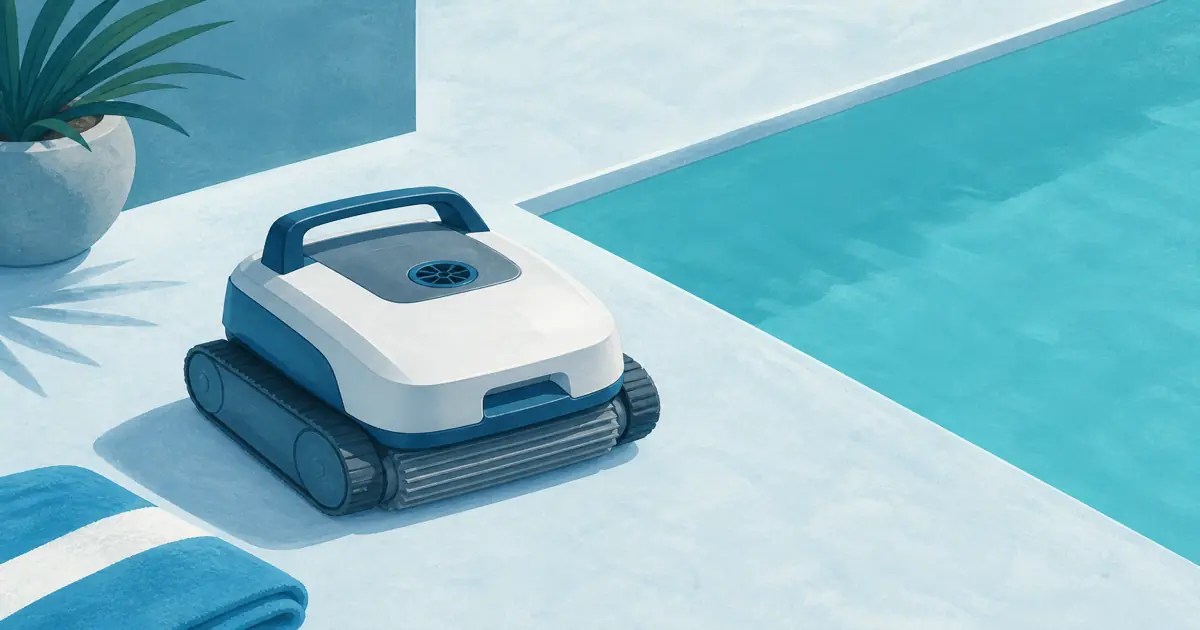
Best Cordless Pool Vacuum (2026): Robots and Handhelds That Finish
Robotic cleaners
The best cordless pool vacuum is the one that finishes your square footage before the battery dies. The WYBOT C1 covers most pools, the WYBOT C2 handles larger footprints, and a Pool Blaster handheld cleans steps and spas.
Our picks
The best cordless pool vacuum is the one that finishes your pool before the battery dies. The WYBOT C1 covers most mid-size in-ground pools, the WYBOT C2 handles a bigger footprint and finer debris, and the Pool Blaster Max is the handheld you keep for the places a robot cannot reach.
Three different machines share the search, and picking the wrong type is the most common mistake. A cordless robot is a weekly autopilot. A cordless handheld is a spot tool. A corded robot solves the same job with plug-in power and no battery to watch.
This page is for people who already decided the cable is the thing they want to drop. Browse more robotic cleaner guides and the best robotic pool cleaner pillar if you are still choosing between corded and cordless. If circulation is weak, pair cleaning with a matched best pool pump before you blame the robot.
Quick comparison
What shoppers mean by “cordless pool vacuum”
Three products share the search, and the titles rarely make the difference clear.
A cordless robot has onboard motors, a filter basket, and a charger. You drop it in, let it run, then lift it out to charge. It is the weekly autopilot, and it is what most people mean by the phrase.
A cordless handheld is a pole vacuum for steps, corners, and spas. It is a spot tool. It will not clean a whole pool in one go, and it is not meant to.
A corded robot still belongs in the conversation because it solves the same job with plug-in power. If you want that lane, use the robotic pillar. This page is for people who already decided the cable is the thing they want to drop.
Are cordless pool cleaners worth it?
For most owners who stopped using a suction cleaner because of the hose, yes. The cordless robot removes the two things people hate most: the floating cable and the skimmer hose snake.
The trade is runtime and price. A cordless robot runs for one to three hours per charge, and it costs more than a basic suction or pressure cleaner. A corded robot can run all day on a cable and often costs less for the same suction.
So the honest test is simple. If you will actually use a cleaner when it is easy to deploy, cordless wins. If you want the machine running for hours at a time and do not mind the cable, corded is the better buy.
Hero pick: WYBOT C1
The WYBOT C1 is the default for a typical mid-size in-ground pool. The listing targets about 1,600 square feet, and runtime is around 150 minutes, which covers a normal weekly cycle if you empty the basket.
You get floor, wall, and waterline modes without dragging a tether around the deep end. App scheduling is there if you want it. Plenty of owners just charge, drop, and fetch.
The honest limits: charge before a heavy leaf week, and stay inside the size rating. A cordless robot that runs out of battery in a too-big pool will leave stripes. If your shell is a compact above ground pool, confirm the floor is flat enough before you assume any wall climber will behave.
When to step up to the WYBOT C2
The WYBOT C2 is the better buy when the pool is bigger or the debris is finer. Dual filtration is the practical upgrade, not a prettier app screen. Eco runtime stretches further than the C1 on larger footprints.
Wall and waterline modes are still in the mix. Self-parking helps when you do not want to fish a dead robot off the floor. The tradeoff is setup. If you never want to touch an app, the C1 stays simpler.
Pick the C2 when you already know the C1 size band is tight, or when silt and dust are the weekly fight, not just leaves.
Best handheld: POOL BLASTER Max
The POOL BLASTER Max is the cordless handheld to keep alongside a robot. It is hoseless and self-contained, so it picks up debris into its own filter bag rather than pushing it through the pool filter. That means less backwashing and less strain on the pump.
It is the right tool for steps, corners, a tanning ledge, and a spa seat. Runtime is about an hour, which is plenty for spot cleaning. It will not replace a robot for a full pool, and if you expect it to, you will be disappointed.
Buy it if your pool has steps, a spa, or corners that collect debris. Skip it if you want one machine to do the whole pool, or if your debris is mostly fine silt that clogs a standard bag.
Corded still wins some pools
Cordless is a cable decision, not a personality upgrade.
Stay corded if you want two-hour cycles every other day without watching a charger, or if the pool is long enough that batteries feel like a ration. The corded robot lane on our robotic guide is still the workhorse answer for those yards.
Stay cordless if cable tangles are the reason you stopped running a robot. That is a real ownership problem. Solving it with a rated cordless unit is the whole point of this page.
Quick fit check before you order
Measure length and estimate square footage before you click buy. Then read the listing’s wall-climb claim out loud. If it only promises the floor, believe it.
Charging, filters, and the first two weeks
Charge on a dry, shaded table, not on hot concrete. Rinse the basket after every run, including the fine filter if the C2 is in silt mode. Dried debris is how “weak suction” reviews get written about a robot that was just clogged.
Wash the handheld bag the same way. A Pool Blaster bag that never gets rinsed loses suction long before the battery does.
The first week, watch one full cycle. Note whether it climbs, where it parks, and whether it finishes before the battery dies. If it dies early, the pool is bigger than the rating, the filter was dirty, or you started with a partial charge. Fix those before you assume the model is wrong.
A pool robot caddy helps if you hate hauling a wet robot across the deck. If you still need a hose-and-head vacuum for storms, pair it with a pool vacuum hose as backup, not as the weekly plan.
Bottom line
For most mid-size in-ground pools, the WYBOT C1 is the best cordless pool vacuum to start with. Move to the WYBOT C2 when size or fine debris outgrows the C1, and keep a Pool Blaster Max for the steps and spa seats a robot never reaches. Match the square-footage rating, confirm wall climb if you need it, and empty the filter after every cycle.
Frequently Asked Questions
What is the best cordless pool vacuum?
The WYBOT C1 is the best cordless pool vacuum for most mid-size in-ground pools, with about 150 minutes of runtime and floor, wall, and waterline coverage. Move to the WYBOT C2 for a larger pool or finer debris, and add a Pool Blaster Max handheld for steps and spas the robot cannot reach.
Are cordless pool cleaners worth it?
They are worth it if cable tangles are the reason you stopped running a cleaner. A cordless robot skips the floating cable, the booster pump, and the hose, so it gets used more often. They cost more up front than a suction cleaner, and you trade some runtime for the convenience.
Is a cordless robot better than a corded one?
Cordless wins when your pool fits the listed square footage and you hate managing a cable. Corded units still win on all-day suction and long cycles without a charge. If you want that lane, the best robotic pool cleaner guide covers it.
How long should a cordless cycle last?
Plan on 90 to 150 minutes for a mid-size in-ground pool, and up to three hours for the larger cordless robots. Empty the filter after every run. A clogged basket makes a healthy battery look weak.
Is Dolphin or Polaris better?
Both are well-known corded and pressure-side brands rather than cordless ones. Dolphin makes robot cleaners that run on a power cable, and Polaris makes pressure-side cleaners that use a booster pump. If you want no cable at all, the cordless picks here are the right comparison.
Will it climb walls?
Only if the listing says wall and waterline modes. Floor-only cordless units leave a scum line. The WYBOT C1 and WYBOT C2 both advertise wall climbing, and the app lets you turn those modes on or off.
Can I use one in an above ground pool?
Sometimes, if the floor is flat and the size rating fits. Compact above ground shells often do better with a dedicated unit from our best above ground pool cleaner guide, and a handheld is the better tool for a small soft-sided pool.
Do I still need a handheld vacuum?
A robot is the weekly autopilot. A handheld is the spot tool for steps, corners, and spa seats after a party. Keeping both on hand is cheaper than expecting one machine to do every job.
Does chemistry still matter?
Yes. A vacuum moves dirt. It does not fix chlorine or pH. Test weekly with a kit you trust, and fix the water before you blame the cleaner for a cloudy pool.
Where should I charge it?
On a dry, shaded table, not hot concrete. Heat is harder on these batteries than a normal weekly cycle, and charging on a hot pad is a common way to shorten battery life.