Pool Alkalinity Increaser (2026): Stop pH Bounce With Baking Soda
Water care
Add pool alkalinity increaser when total alkalinity tests low. Use sodium bicarbonate, circulate, then recheck pH. Clorox 5 lb and In The Swim 5 lb both cover a typical backyard correction.
Our picks
Total alkalinity is the water’s buffer. When it is low, pH jumps after rain, after a swim day, or after you add a small chemical dose. People then chase pH every morning and never catch up. The actual job is to get TA into the range for your surface, then leave pH alone unless it is still out of band.
Alkalinity is one dial in the water care routine, along with pH, calcium, and stabilizer.
Test with drops or a trusted strip from our best pool test kit guide. This comparison uses live US Amazon listings and review patterns. We did not titrate these bags in a lab.
Read TA and pH as a pair
Take both readings before you open a bag. If TA is 60 ppm and pH is 7.1, alkalinity increaser is the first product. If TA is 110 ppm and pH is 7.1, you likely need soda ash instead. If both are high, do not add this product at all.
Surface type matters. Vinyl often wants higher TA than plaster. Salt systems still need a stable buffer. The cell does not replace baking soda.
Calculate the dose from gallons. In The Swim’s listing states about 1.5 pounds per 10,000 gallons for a 10 ppm rise. Clorox’s jug uses the same idea with its own chart. Weigh or use the cup the brand provides. Eyeballing a “small pile” is how TA overshoots to 180 ppm and pH gets sticky.
Two 5-pound bags, same chemical
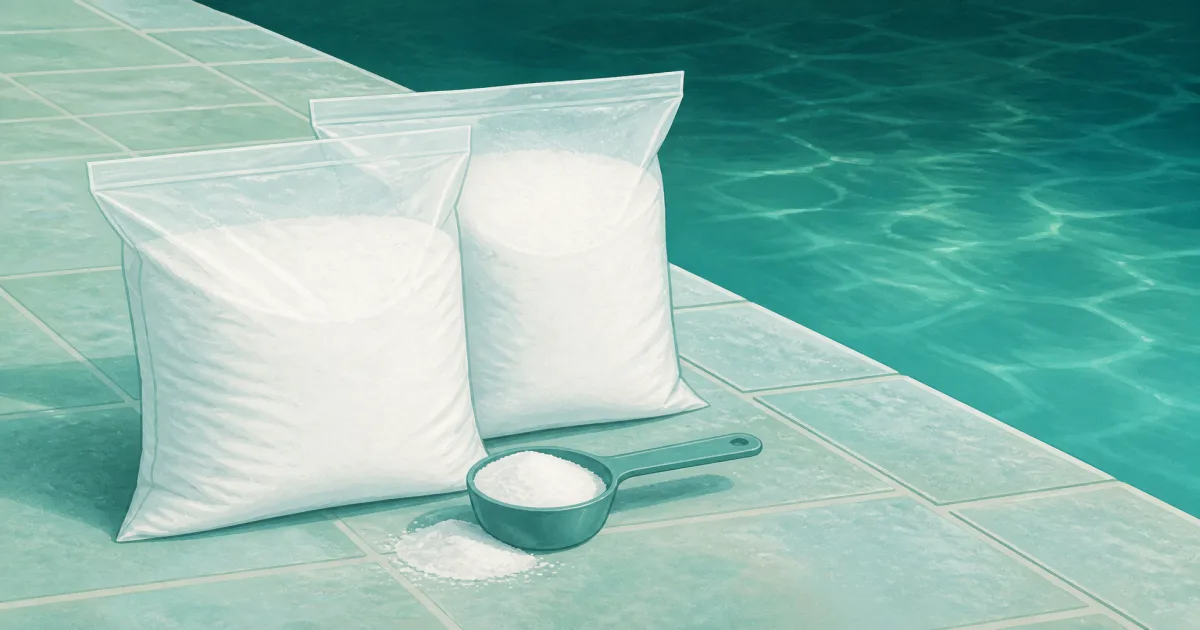
Clorox Pool&Spa Alkalinity Increaser is the everyday 5-pound choice. Owners buy it after a spring fill, after heavy rain, or when pH will not stay put. Broadcast it with the pump on, or pre-dissolve if you prefer a slurry. It is still baking soda. The brand packaging mainly helps you dose and store it.
In The Swim Alkalinity Increaser is the same job in a pool-store bag. The 5-pound size matches Clorox for a typical correction. Choose it when you like the printed 10 ppm math or you already buy In The Swim calcium and shock. Do not buy both 5-pound bags for one adjustment. One product, one calculated dose.
A 25- or 50-pound pail only makes sense when you already know this pool is large and TA runs low every season. For a first buy, 5 pounds is enough.
Add it without creating a cloud
Run the circulation. Walk the product around the deep end. Keep dry powder off a vinyl step. Give it time to dissolve before you decide it “did nothing.”
Retest TA and pH. If TA is in range and pH is still under 7.2, use a small soda ash dose next, not another load of bicarbonate. If TA overshot, stop adding. High TA makes pH stubborn in the other direction.
This product will not clear algae, strip metals, or replace a dirty filter. It also will not raise calcium hardness. That is a separate bag in our pool calcium increaser guide.
Dose from gallons, not from a vibe
A 12,000-gallon vinyl pool at 70 ppm TA needs a larger addition than an 8,000-gallon plaster pool at 90 ppm. Use the 10 ppm math, then stop for a retest. If you need a 40 ppm rise, that is four increments, not one heroic dump. Large dumps cloud the water and can push pH up more than you wanted.
Broadcast with returns aimed down so the powder moves off the floor. On vinyl, walk the perimeter. A white pile on a liner can bleach a spot if it sits. On plaster, you still do not want a drift of undissolved bicarbonate in the shallow end where kids walk.
After TA is in range, pH may still read low or high. That is normal. Fine-tune pH with the correct acid or soda ash product, in small amounts. If you immediately add more alkalinity increaser because pH looks “off,” you will stack TA into the 180s and then fight a lock for a week.
Keep a written log: date, gallons, TA in, amount added, TA out, pH out. The log is how you learn whether this pool needs a spring correction once, or a midsummer top-up after storms. Grocery baking soda can work in a pinch if you weigh it. The pool bag is easier to store on a wet pad and harder to confuse with cooking supplies. If TA is already in range, leave the bag closed. Extra bicarbonate will not make the water clearer.
Bottom line
Pool alkalinity increaser is sodium bicarbonate for a low TA test. Clorox 5 lb is the straightforward backyard jug. In The Swim 5 lb is the same chemical with explicit ppm math. Fix the buffer, retest pH, and only then reach for soda ash if pH is still low.
Frequently Asked Questions
What is pool alkalinity increaser made of?
Sodium bicarbonate, the same compound as baking soda. It raises total alkalinity. It is not soda ash (pH increaser) and not calcium increaser.
What TA range should I use?
Many vinyl pools sit well around 120 to 140 ppm. Plaster and pebble often target about 80 to 120 ppm. Use your surface type and the test kit, not a single internet number.
Will this also raise pH?
A little, usually less than soda ash. That is why you retest both TA and pH after the water mixes.
Can I use grocery-store baking soda?
Chemically it is the same ingredient. Pool bags are dosed for gallons and stored for a wet equipment pad. If you use household baking soda, you still need accurate scale weight and a test.
How long until I retest?
Run the pump and wait at least an hour, longer if the label says so. TA does not need overnight in most backyard pools, but rushing the test wastes the next scoop.
Why does pH keep crashing after I add pH Up?
Alkalinity is probably low. The water has no buffer. Fix TA, then fine-tune pH with pool pH increaser if it is still below 7.2.
Does rain lower alkalinity?
Dilution and acidic rain can pull TA down. Test after big storms instead of adding a routine scoop every Monday.