Pool pH Increaser (2026): Raise pH Without Guessing the Dose
Water care
Add pool pH increaser only when a test shows pH below about 7.2. Use the label dose for your gallons, run the pump, and retest before adding more.
Our picks
Low pH makes water feel sharp on eyes and skin. It also puts extra wear on metal fittings and plaster. The fix is not a weekly ritual. It is a test, a measured dose of soda ash, and another test. Start with numbers from a reliable kit in our best pool test kit guide. Guessing from water color wastes product and can swing you past 7.8.
pH adjustment sits with the water care balance guides, alongside alkalinity, calcium, and stabilizer.
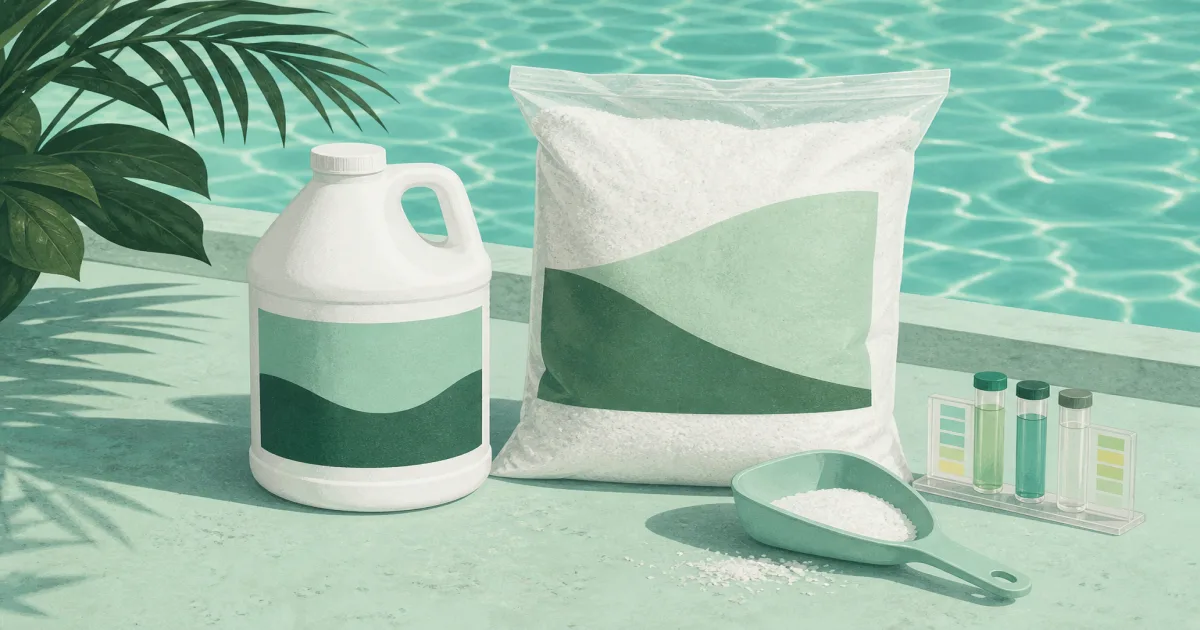
Soda ash raises pH. It is not alkalinity increaser, and it is not calcium. Dose small, circulate, and retest. A 4-pound jug is plenty for a typical backyard correction. A 10-pound bag makes sense when you already know this pool eats pH Up after rain or well-water fills.
Confirm it is pH, not alkalinity
pH is how acidic or basic the water is right now. Total alkalinity is the buffer that keeps pH from leaping around. They move together, but they are not the same chemical.
If pH is 7.0 and alkalinity is already 100 ppm, soda ash is the right tool. If pH is 7.0 and alkalinity is 50 ppm, the buffer is the first job. Adding only pH increaser in that case often fails by the next afternoon.
Write the readings down. Then read the pH Up label. Most charts dose in ounces or cups per 10,000 gallons for a 0.2 rise. Your pool is probably not 10,000 gallons on the nose, so do the arithmetic once.
Choose a starter jug or a larger bag
Clorox Pool&Spa pH Up in the 4-pound jug is the sensible first buy. It is enough for a normal correction on a typical backyard pool without leaving a 25-pound pail open in a humid shed. The listing is a straightforward raise-pH product with a very large review base. Owners use it after rain, after a heavy tablet week, or after filling with acidic well water.
Robelle 10 lb Premium pH Up is the bulk bag when you already know this pool eats soda ash. It is labeled 100% sodium carbonate. The extra weight helps a large in-ground pool or a season of repeated small corrections. It is also easier to overshoot. Pre-dissolve in a plastic bucket of pool water, pour slowly around the deep end, and stop for a retest before you empty the bag.
Do not mix pH Up in a bucket with shock, acid, or chlorine. One chemical at a time.
Add it the boring way
Run the pump. Pre-dissolve if the label says to. Walk the slurry around the perimeter instead of dumping it in one corner. Keep concentrated granules off a vinyl liner.
Give the water time to mix. An hour of circulation is a common wait, but the bottle wins if it asks for longer. Retest pH and alkalinity. If you are still below 7.2, add another calculated amount. If you jumped to 7.8, stop. Do not chase it with acid the same evening unless the label and your test both say the water is stable enough.
Store the container closed and dry. Soda ash cakes when it sits open.
Common mistakes
The usual miss is treating pH Up like a weekly tablet. pH is a reading, not a schedule. Another miss is ignoring trichlor. Those slow tabs add acid over time, so pH keeps falling until you change the chlorination plan.
Do not use this product to “fix” cloudy water, algae, or a dirty filter. Those are circulation and sanitizer jobs. A robot still helps the floor while you correct chemistry. Pair the habit with a cleaner from our best robotic pool cleaner guide if debris is the other half of the weekend.
Work through a real low-pH week
Say the weekend test is pH 7.0, TA 100 ppm, and the pool is 15,000 gallons. Alkalinity is fine, so soda ash is the right bag. Use the Clorox or Robelle chart for a 0.2 rise, add that amount with the pump on, and retest after an hour. If you land at 7.3, stop. If you are still at 7.1, add the next chart step. Do not empty a 10-pound bag because the first scoop “didn’t look like much.”
Rain the next night can pull pH down again. That is dilution and carbon dioxide, not a defective jug. Retest instead of doubling the dose from memory. If pH keeps falling while you are on 3-inch trichlor tabs, the tabs are part of the story. Consider a floater schedule change or unstabilized chlorine rather than a daily pH Up habit.
Fill water matters too. Some well water arrives acidic. If you just topped off a few inches, test before you assume the pool “always needs soda ash.” Keep calcium and CYA on the same log so you do not confuse four white powders. Each one answers a different test.
Bottom line
Pool pH increaser is soda ash for a low pH test, nothing more. The Clorox 4 lb pH Up covers most first corrections. Keep Robelle 10 lb Premium pH Up when the pool is large or the dose chart keeps calling for more. Test, dose, circulate, retest. If alkalinity is the real problem, switch to that bag instead of pouring more soda ash.
Frequently Asked Questions
What does pool pH increaser actually contain?
Most backyard jugs are sodium carbonate, often called soda ash. That is different from baking soda, which is the usual pool alkalinity increaser.
What pH should I aim for?
Most residential pools sit well between 7.2 and 7.6. Below 7.2, water can feel harsh and can be harder on metal and plaster. Above the high 7s, chlorine works less efficiently.
Should I fix alkalinity or pH first?
Test both. If total alkalinity is very low, pH will keep bouncing after you add soda ash. Raise alkalinity into range, then fine-tune pH. See our pool alkalinity increaser guide for that chemical.
Can I swim right after adding it?
Follow the label. A common habit is to add with the pump running, stay out until the product is dispersed, then retest. Do not dump a pile on a vinyl step and get in.
Why did pH drop again the next day?
Rain, heavy bather load, trichlor tablets, and low alkalinity all pull pH down. Fix the driver instead of adding a scoop every morning.
Is this the same as calcium increaser?
No. Calcium hardness is a different test and a different bag. Do not substitute products because both look like white granules.
How do I know the dose?
Use pool volume and the chart on the container. A 4-pound Clorox jug and a 10-pound Robelle bag use the same idea: small measured additions, then a retest.