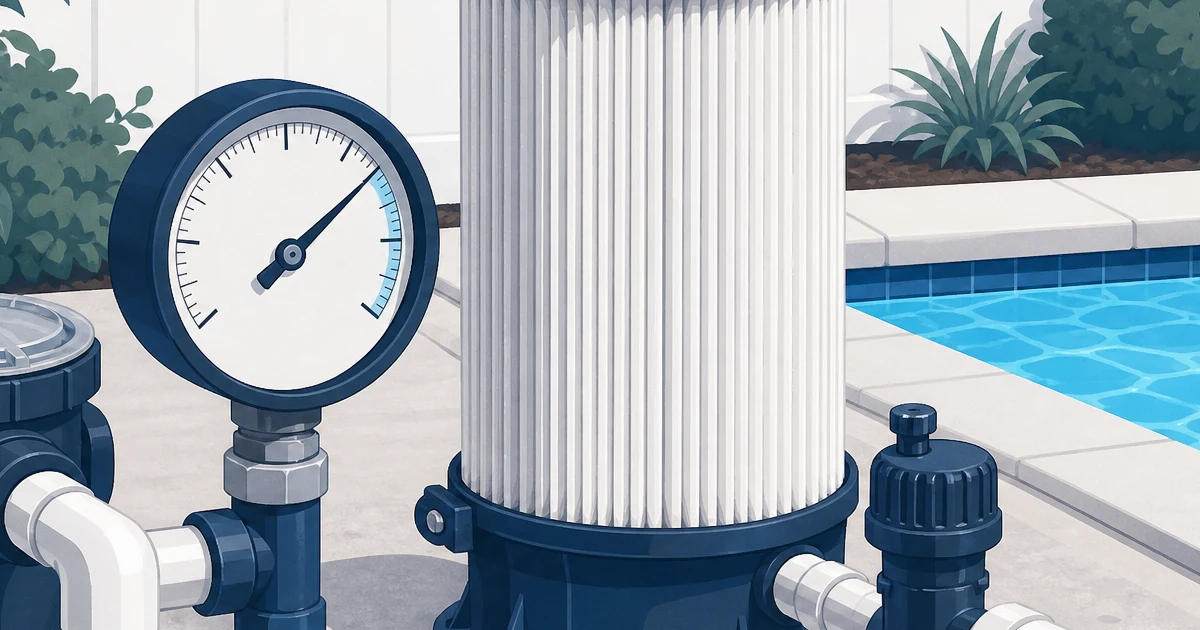
Pool Filter Pressure Gauge: When to Replace It
Water care
A pool filter pressure gauge is worth replacing when the needle sticks, the lens is cracked, or it never returns to zero with the system off.
Our picks
A pressure gauge is a small part with a useful job. It tells you what “clean” looks like for your own filter, then helps you notice when flow is getting restricted. When the gauge is wrong, people often backwash too often, wait too long, or start replacing perfectly good equipment.
Pressure readings drive the water care coverage of filtration and backwashing.
Match the mount and thread first. A 1/4-inch NPT bottom-mount gauge will not stand in for a rear-mount branded part. Photograph the old gauge, note the range, and only then pick MEASUREMAN for a common bottom mount or the Pentair 190058 when your tank is on its compatibility list.
Start with your clean-pressure baseline
The important reading is not a number from a neighbor's pool. It is the reading on your system just after the filter has been cleaned, the air has been bled out, and normal circulation is running.
Write that number on the tank or in your phone. Your filter manual will say how much of a rise calls for a cleaning or backwash. Many systems use a rise around 8 to 10 PSI as a reminder, but the manual for your filter wins.
A gauge does not diagnose every water problem. Low chlorine, algae, a blocked skimmer, and a clogged filter can all make a pool look rough. Check water balance with a reliable pool test kit before treating pressure as the only answer.
Signs the gauge itself is bad
The clearest sign is a needle that does not return to zero once the pump is off and pressure has been released. A foggy or cracked lens is another good reason to replace it, especially if you cannot read the marks from the equipment pad.
Watch for a needle that jumps, hangs in one place, or changes only after tapping the case. A little vibration from a pump is normal. A gauge that needs encouragement to move is not trustworthy.
Do not assume a high reading means the gauge is faulty. First check whether the filter actually needs service. If the pressure is higher than the clean baseline and the flow has dropped, follow the manual's cleaning steps. Our pool filter cleaner guide can help you separate routine cleaning from a deeper problem.
Match the replacement before you buy
Take a photo of the old gauge and its connection before ordering. You need the mounting style, thread size, pressure range, and any filter-specific part number. A common 1/4-inch NPT bottom mount is not the same thing as a rear-mounted branded replacement.
If you have a Pentair filter, use the parts diagram or model label, not a photo that looks similar online. The Pentair 190058 Pressure Gauge Replacement is intended for listed Clean & Clear, EasyClean, FNS Plus, and related models. It is a better choice than forcing a generic gauge into a system with a different fitting.
The two picks and who they suit
The MEASUREMAN 2 Inch Pool Filter Pressure Gauge is the simple option when you have confirmed a 1/4-inch NPT lower connection. Its 0-60 PSI range gives plenty of room for typical pool-filter readings, and the adjustable bezel makes it easy to mark your clean baseline.
The Pentair 190058 Pressure Gauge Replacement is the safer option for a compatible Pentair system. It costs more than a generic gauge, but correct fit matters more than saving a few dollars on a threaded part that leaks or cannot be read properly.
Neither product is a universal upgrade. If the old gauge has an unusual connection, take the model number to a pool supplier or contact the equipment maker before ordering.
Replace it safely
Turn off power at the breaker or timer. Close valves as your manual instructs, open the air relief, and wait until pressure is fully released. Confirm the old gauge reads zero before removing it. A filter tank under pressure can cause serious injury.
Use the sealing method in the replacement instructions. Do not overtighten a small gauge into plastic threads. If you see a leak after startup, switch the pump off and correct it rather than trying to tighten a pressurized fitting.
After installation, run the system, bleed air according to the manual, and check for seepage. Record the fresh clean-pressure reading. That new number is the useful one for the rest of the season.
Bottom line
Replace a pool filter pressure gauge when it sticks, leaks, cracks, or cannot return to zero after safe depressurization. Choose the MEASUREMAN only for a matching 1/4-inch NPT bottom mount. Choose the Pentair 190058 for a verified compatible Pentair filter. Then record the clean baseline and use your filter manual, not guesswork, to decide when it needs attention. If backwash never drops pressure on a sand system, inspect the pool multiport valve next.
Frequently Asked Questions
What pressure should my pool filter run at?
There is no universal number. Record the clean pressure after your own filter is cleaned and bled. Use the manual's guidance for the pressure rise that means it is time to clean or backwash.
Can I replace a pool pressure gauge while the pump is running?
No. Switch off the pump, relieve pressure, and confirm the gauge reads zero before opening any filter connection.
Why does my gauge read pressure with the pump off?
A stuck needle, trapped pressure, or a damaged gauge can cause that reading. Release pressure safely first. If the needle still does not return, replace the gauge.
Are all pool pressure gauges the same?
No. Thread size, mounting position, range, and filter-specific fittings vary. Match the old part and the equipment manual.
What are the signs a pool filter pressure gauge is bad?
Replace it if the needle sticks, the lens is cracked or foggy, or the reading will not return to zero after the system is safely depressurized. A needle that needs tapping to move is not trustworthy.
How do I install a replacement pressure gauge?
Turn off power, close valves as your manual instructs, and open the air relief until pressure is fully released. Use the sealing method in the replacement instructions and do not overtighten a small gauge into plastic threads.
Which pressure gauge fits my filter?
Match the mounting position, thread size, range, and filter-specific part number. A 1/4-inch NPT bottom mount is not the same as a rear-mounted branded part.