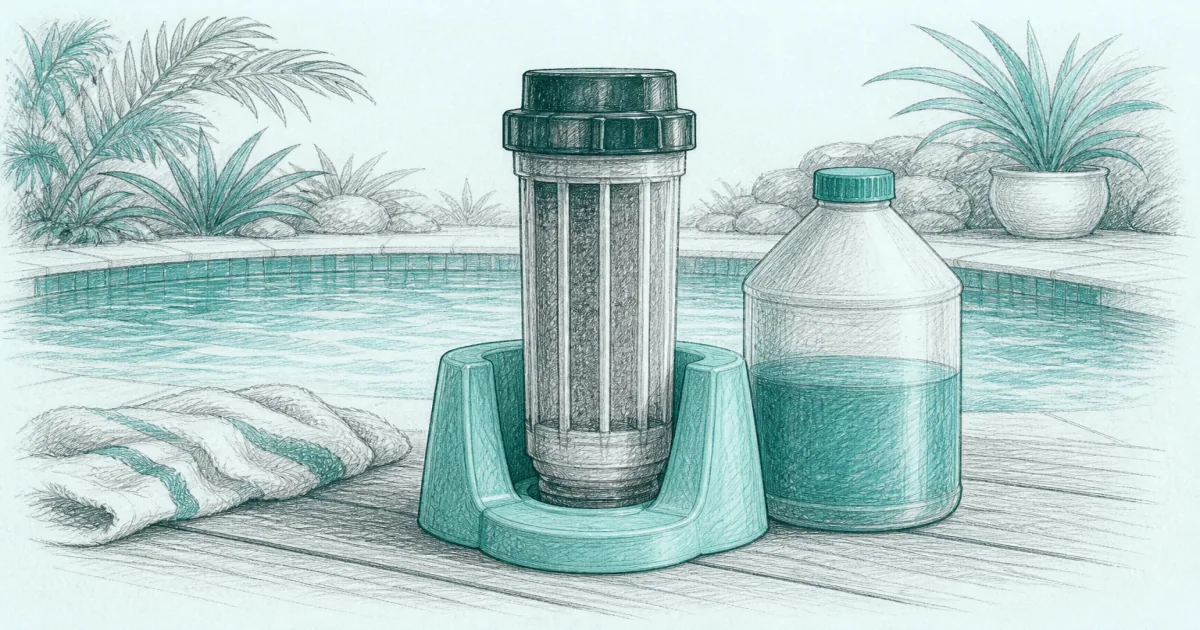
Salt Cell Cleaner (2026): Acid Wash Kit vs Stand for Scale
Water care
A salt cell cleaner is the acid-wash step that clears chalky scale from generator plates so the cell can make chlorine again.
Our picks
Scale on the plates is why a salt water chlorinator suddenly under-produces even when your salt bag math looks fine. A salt cell cleaner is the controlled acid wash that dissolves that chalky crust so the cell can make chlorine again.
This sits in water care next to testing and salt dosing. Cross-check salinity with a saltwater pool test kit before you assume the cell is dead.
When the cell needs a cleaner, not more salt
Low chlorine with a healthy salt reading is the classic tell. You may also see white crust on the plates, a “inspect cell” light, or a generator that runs longer without holding residual.
If salt is actually low, bags of pool salt come first. If salt is fine and the plates look coated, cleaning beats buying another bag.
Kit pick: sealed acid-wash setup
The Acid Cleaning Kit – Salt Cell Cleaner for Pool with O-Ring is the practical buy when you want hardware that holds the cell upright with a seal instead of improvising in a five-gallon bucket.
It fits the common Pentair IntelliChlor and iChlor cleaning workflow many owners already follow in the manual. Cap one end, fill with the labeled cleaner or the dilute acid your maker allows, soak for the printed window, then rinse thoroughly before reinstalling.
Skip mystery bottles with no dilution guidance. The point of a kit is control: sealed soak, timed contact, clean rinse.
Hayward stand: upright soak for TurboCells
The AR-PRO GLX-CELLSTAND is the better hardware lane when you run a Hayward TurboCell. The stand keeps the cell vertical so acid contacts the plates evenly instead of pooling in one corner of a tipped housing.
Remember the stand is not the chemistry. You still need a labeled salt cell cleaner or the dilute acid your Hayward procedure allows, plus gloves and eye protection. Once you own the stand, seasonal cleans get faster.
Safe soak sequence
- Power down the chlorinator and shut off the pump if the manual says to isolate the cell.
- Remove the cell and photograph the plates so you know how bad the scale was.
- Mount the cell in the kit or stand so the open end faces up and seals hold.
- Fill with the cleaner or dilute acid to the plate line, never past fittings that should stay dry.
- Soak only as long as the label or manual allows, usually under half an hour.
- Neutralize or dispose as directed, rinse the cell with a hose, and reinstall dry seals correctly.
If residual chlorine still will not hold after a clean soak, retest salt, stabilizer, and pH with a solid pool test kit. Chemistry problems can look like a dirty cell.
What “clean enough” looks like
After a good soak, plates should look mostly free of chalky crust. A faint haze can remain on older cells. Shiny metal scrapes are a bad sign that someone used a screwdriver.
Write down the date you cleaned. If the inspect light returns in a few weeks, your water may be scaling as fast as you clean. Bring calcium hardness and pH back into range so you are not acid-washing on a loop.
Self-cleaning reverse-polarity cells still scale in hard water. The reverse cycle slows buildup. It does not make a salt cell cleaner obsolete when the plates are already white.
PPE and deck setup
Work outdoors with eye protection, chemical gloves, and a hose ready. Keep kids and pets away from the soak. Have a plastic bucket for spills and a labeled rinse zone so acid never sits on stone coping.
Never mix a salt cell cleaner with chlorine, shock, or other acids on the deck. One job, one container, one rinse. If you use dilute muriatic acid, follow the cell maker’s ratio exactly. Stronger is not faster. It is just harsher on seals and coatings.
Cleaner vs general scale remover
A pool scale remover treats water and surfaces. It is not a substitute for removing the cell and soaking the plates the way the manufacturer describes.
After you reinstall
Restore flow, clear any air locks the manual mentions, and give the generator time to rebuild residual. Test free chlorine that evening and again the next morning. A clean cell with correct salt should climb back toward your target without dumping endless bags of salt.
If output stays flat, confirm the flow switch, cable seating, and salt ppm again. Then decide whether the cell is end-of-life. Cleaning cannot revive a plate set that has already thinned out after years of use.
Who should skip a DIY clean
Skip DIY if your cell is still under a service plan that voids acid washes, if seals are cracked, or if you are not comfortable handling dilute acid. Call a tech, or replace an end-of-life cell instead of soaking a warped plate set.
Also skip aggressive scrubbing of the plates with metal tools. Scratching the coating shortens cell life faster than light scale ever did.
Bottom line
Buy the cleaner workflow that matches your cell brand. Pentair-style owners usually want a sealed kit like the Acid Cleaning Kit. Hayward TurboCell owners usually want the AR-PRO GLX-CELLSTAND plus the acid procedure in the manual. Confirm salt first, clean second, replace only when cleaning and chemistry both fail.
Frequently Asked Questions
What is a salt cell cleaner?
A salt cell cleaner is the soak solution or kit used to dissolve calcium scale from salt chlorine generator plates. Scale blocks chlorine production even when salt ppm looks fine.
How often should I clean a salt cell?
Clean when the cell inspect light or low-output warning appears, or when you can see white crust on the plates. Many owners do one thorough clean per season; hard water may need more.
Can I use muriatic acid as a salt cell cleaner?
Many manuals allow a carefully diluted acid soak in a proper stand. Follow your cell maker’s dilution and time limits. Never mix acid with other chemicals, and wear eye and hand protection.
Is Natural Chemistry Cell Cleaner different from a stand kit?
Yes. A branded cell cleaner is the liquid. A stand or acid-wash kit is the hardware that holds the cell upright while that liquid works. You often need both pieces of the workflow.
Will a salt cell cleaner fix low salt readings?
No. Confirm salt with a saltwater pool test kit first. Clean the cell when plates are scaled. Add pool salt only when the water is actually low.
How long should the soak take?
Most residential soaks land in the 15 to 30 minute window, or whatever your manual prints. Do not leave the cell in strong acid overnight.
Can I pour the spent cleaner into the pool?
Some dedicated cell cleaners are labeled for pool disposal after neutralization. Loose muriatic acid needs careful dilution and pH control. Read the label and your chlorinator manual before you dump anything.
When should I replace the cell instead of cleaning?
If plates are warped, coated past cleaning, or the cell still fails after a correct soak and correct salt, budget for a replacement on the salt water chlorinator guide.