Best Above Ground Pool Pump (2026): Match Combo Size to Your Shell
Accessories
The best above ground pool pump for most soft-side pools is a sand filter combo sized to gallons, not horsepower. The Intex SX2800 is the safe first buy, the 16-inch SX3000 covers bigger shells, and the XtremepowerUS 19-inch is the upgrade when higher flow and a 7-way valve matter more than sticker.
Our picks
16-inch SX3000 when the pool runs above 15,000 gallons, or step up to the XtremepowerUS 19-inch when higher flow and a 7-way valve matter more than sticker.
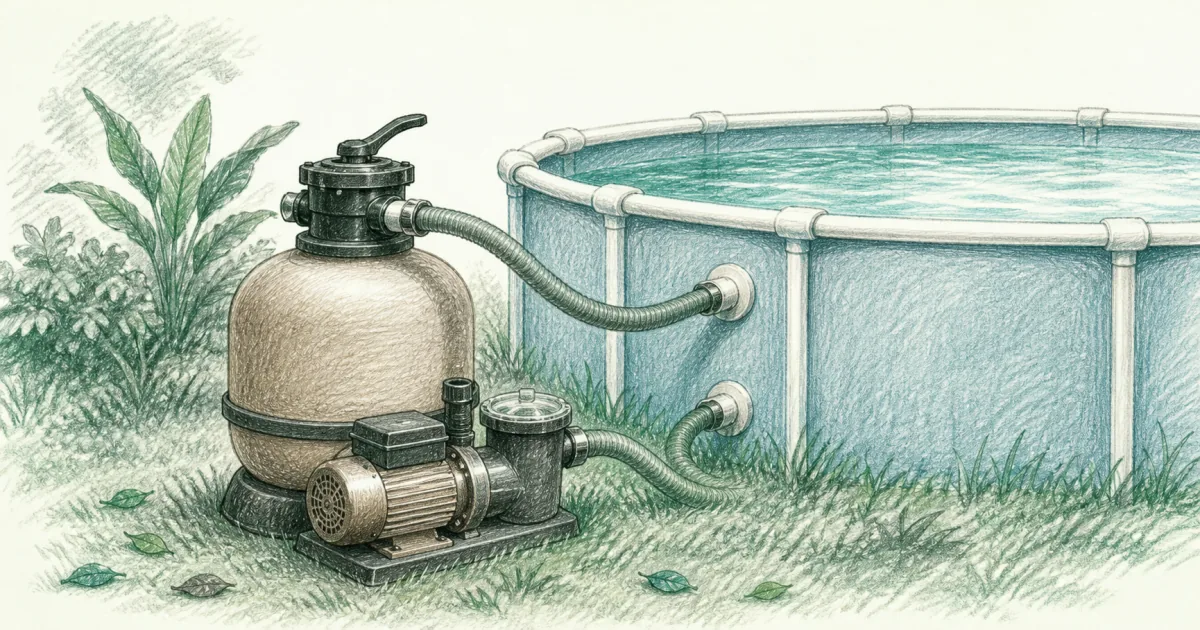
Above-ground pools do not need the same pump as a 30,000 gallon inground pad. The plumbing is short, the hose fittings are smaller, and most shells run on a single 115V outlet with a GFCI plug. The best above ground pool pump is the one that matches that reality without pretending to be a bigger system than the pool needs.
Start with the accessories category if you are still building out the deck kit. For the broader pump question that covers inground VS circulators and soft-side combos on the same page, see our best pool pump guide. This page stays focused on the above-ground lane, naming three live Amazon picks sized to common soft-side shells.
Match the pump to your pool gallons first
A pool pump has one job, which is turning the full volume of water over at least once a day. Above-ground pumps are usually sold by tank size (the sand chamber) and pump flow (the GPH number on the box), but the tank size is the more honest signal. A bigger sand bed holds more debris before it needs a backwash, which is the boring maintenance win that matters across a swim season.
Horsepower on the box is mostly marketing noise in the above-ground lane. A 1 HP pump on a small soft-side pool pushes water through the sand bed too fast and catches fewer particles. Match the system flow to your gallons, then confirm hose diameter on the pool label before you order.
Top pick: Intex SX2800 Krystal Clear
The Intex Krystal Clear SX2800 is the practical best above ground pool pump for most soft-side shells in the 5,500 to 17,200 gallon range. The 14-inch tank holds about 77 lb of #20 silica sand, the pump moves 2,800 GPH on a 0.6 HP motor, and the 6-function valve covers Filter, Backwash, Rinse, Recirculate, Drain, and Close.
Owners like the built-in 24-hour timer because it sets the run window once and forgets it. The Hydro Aeration outlet fitting stirs the surface water slightly, which helps with clarity on still afternoons when the pump is on a long low window. The pump runs on a normal 115V GFCI outlet, which most backyards already have near the pool pad.
The honest downside is the hose adapter. Intex ships 1.5-inch connector hoses in the box, while Bestway pools often use 1.25-inch ports. The Intex Adapter B set or a GAME 40 mm conversion kit closes that gap, but plan for the adapter before the pump arrives, not after.
Best for larger pools: Intex Krystal Clear 16-inch SX3000
The Intex Krystal Clear 16-inch is the same family as the SX2800, sized up for pools above about 15,000 gallons. The 16-inch sand tank holds roughly 120 lb of #20 silica for longer runs between backwash cycles, and the 3,000 GPH pump keeps system flow around 2,450 GPH through the sand bed. It is the right pick when the SX2800 starts to run out of headroom during algae weeks.
The 6-function valve and 24-hour timer are the same logic as the smaller SX2800, so the daily routine does not change. The bigger tank just means fewer backwashes, which is the boring advantage you feel over a full summer.
Two setup notes before you order. First, the sand fill is heavy. The first time you fill 120 lb of silica into the tank, plan a helper and fill the tank halfway with water first so the lateral assembly is weighted down. Second, measure the pad footprint. The 16-inch tank is wider than the 14-inch SX2800, so it will not drop onto the same spot as a smaller combo without a quick re-level.
Best upgrade: XtremepowerUS 19-inch sand filter with 1.5 HP pump
The XtremepowerUS 19-inch sand filter pump is the upgrade for above-ground pools that need higher flow than the SX3000 can deliver. The 19-inch tank holds roughly 175 lb of #20 silica, the 1.5 HP pump moves 4,500 GPH on a 115V outlet, and the 7-way multi-port valve adds the same Waste position a Hayward ProSeries would.
The Waste position matters when you vacuum a dead algae bloom. With the 6-position valve on the Intex combos, the vacuum output cycles back through the filter and loads the sand bed. With the 7-way valve on the XtremepowerUS, you send the vacuum hose output straight to waste, so the algae leaves the pool instead of recirculating through the sand. The 1.25-inch and 1.5-inch hose adapters in the box cover both Intex and Bestway ports.
The tradeoffs are real. A 1.5 HP pump uses more electricity per hour than the smaller combos, and the 19-inch tank footprint is wider than the SX2800. Plan the pad space before you order. Some build dates are also flagged "not for sale in California" on the Amazon listing, so confirm the listing allows your zip code before you click buy.
What about a variable speed pump on an above-ground pool?
Inground pads love variable speed pumps because they run long low-RPM hours. Above-ground shells do not need that. Most run the pump 4 to 8 hours a day on a normal 115V circuit, the hose fittings are smaller, and the plumbing is short. A VS drive on a soft-side pool is overspec and rarely worth the wiring cost.
If you want the deeper VS comparison for inground pads, see our variable speed pool pump guide. For the broader pump-type fork across inground and above-ground, the best pool pump page covers both lanes.
Sand or cartridge for an above-ground pool
Sand wins on most soft-side pools because the maintenance is honest. Backwash the tank when the pressure rises about 8 to 10 PSI above the clean baseline, run a Rinse cycle, and the sand bed is reset in three minutes. No cartridge to pull, no hose to wrestle, no element to replace every few years.
A cartridge pump filters finer, which helps if you have very fine silt or pollen, but the element needs rinsing every four to eight weeks and replacement every one to three years. If you already run a saltwater chlorinator on the same pool, the cartridge deals with the fine debris the salt cell misses. Either way, the combo in the picks above is sand, which is the boring reliable lane most above-ground owners live with.
Sand fill, backwash, and basic care
The sand fill is the one setup step that catches first-time owners. Use #20 silica sand (also called #20 grade or filter sand). Pool stores stock it by the bag, and the label on the tank lists the weight in pounds. Fill the tank halfway with water first so the lateral assembly at the bottom is weighted down, then pour sand slowly so the laterals do not crack under a heavy load.
Backwash on the schedule above, not on a calendar. The pressure gauge on the pump tells the truth: when it climbs 8 to 10 PSI above the clean baseline, switch to Backwash until the sight glass runs clear, then run Rinse for about 20 seconds to settle the sand bed, then return to Filter. Skipping the Rinse step sends fines back to the pool and makes the water look hazy for the first hour after a backwash.
Replace the sand every 5 to 7 years, or sooner if the bed channels and the pressure climbs faster than the backwash can clear. A tank full of channeled sand does not filter, no matter how long the pump runs. The replacement job takes about 30 minutes with a wet-dry vac and a fresh bag of sand.
Hose adapters and Bestway pools
Intex sand filter pumps ship with 1.5-inch connector hoses. Most Intex soft-side pools fit those hoses directly. Bestway pools often use 1.25-inch ports, which means you need either Intex Adapter B (a 1.5 to 1.25-inch stepped hose cuff) or a GAME 40 mm to 1.5-inch conversion kit. Both are inexpensive and ship in a small box, but they are not in the pump box.
Measure the pool port before you order the pump. The wrong adapter sends you back to Amazon for two days with no filtration, which on a hot weekend is the difference between a clean pool and a green one. Pool label, hose diameter, port type: write all three down before you click buy.
Wiring, GFCI, and the first run
Above-ground sand filter pumps run on a standard 115V outlet, but the outlet needs to be GFCI protected. Most outdoor outlets installed after 1971 are GFCI by code, but older pads sometimes have a plain outlet on a deck post. If yours does not trip-test correctly, have an electrician swap the breaker or the outlet before the pool fills. The pump's built-in GFCI on the power cord is a backup, not the primary protection.
Plan a flat, shaded spot within reach of the power cord and the pool hoses. The pad should not flood during storms, and the pump should not sit in direct afternoon sun, which shortens seal life. A concrete slab, a leveled cinder block base, or a composite deck pad all work. Grass is fine for a season, but it gets muddy under the pump and the suction line starts pulling air through the wet soil.
Run the pump with the lid off the strainer housing until water fills the housing and the pump primes. That is the moment most first-timers panic. As soon as the pump holds prime and the pressure gauge climbs into the normal range, put the lid back on with the o-ring seated and start the timer.
How to fit the pump into the weekly routine
Above-ground pools run best on a boring schedule. Drop the pump on a 4 to 8 hour window that covers the hottest part of the afternoon. Empty the strainer basket every few days in leaf season. Backwash when the pressure climbs, not on a fixed day.
Test the water weekly from a pool test kit so you catch low chlorine before algae gets a foothold. Run a pool robot or a suction cleaner for the floor, brush the waterline with a pool brush, and skim the surface with a pool leaf net when wind drops debris.
The pump is the engine. The chemistry, the brushing, and the skimming are the rest of the car. None of them replaces the others. Pair a working pump with weekly chemistry checks and a manual skimmer on a hook, and the pool stays clear without heroic effort.
Bottom line
The best above ground pool pump for most soft-side shells is a sand filter pump combo sized to your gallons. The Intex SX2800 is the safe first buy for pools up to about 17,200 gallons. The Intex SX3000 is the right step up for shells above 15,000 gallons where the smaller tank starts to run out of headroom. The XtremepowerUS 19-inch is the upgrade for owners who want higher flow and a 7-way valve with a real Waste setting.
Match the tank size to your gallons, confirm the hose adapters for your pool brand, and run the pump on a timer that covers the hottest part of the day. The rest is just weekly water testing and a skimmer on a hook.
Frequently Asked Questions
What is the best above ground pool pump for a soft-side pool?
A sand filter pump combo sized to your pool gallons is the right answer for most Intex, Bestway, and Coleman soft-side shells. The Intex SX2800 is the safe first buy for pools up to about 17,200 gallons, and the 16-inch SX3000 covers bigger shells up to about 19,600 gallons.
Do I need a sand filter pump or just a cartridge pump?
Sand wins on most above-ground pools because backwashing clears the media in two or three minutes without pulling out cartridges. A cartridge pump filters finer, but the element needs rinsing every four to eight weeks and replacing every one to three years. If you fight algae or heavy pollen, sand is easier to live with.
What size pump do I need for a 15,000 gallon above-ground pool?
Aim for a combo that turns the pool over in roughly six hours, which works out to about 40 to 45 GPM of system flow. The 16-inch Intex SX3000 and the XtremepowerUS 19-inch both sit in that lane. A 12-inch SX2100 can cover a 15,000 gallon pool on a longer runtime, but it leaves little headroom during algae weeks.
Can I use an above-ground sand pump on a Bestway pool?
Yes, with the right hose adapters. Most Bestway pools use 1.25-inch ports while Intex combos use 1.5-inch hose fittings. The Intex Adapter B set or a GAME 40 mm conversion kit closes that gap. Confirm the port size on your pool label before you order.
How often should I backwash an above-ground sand filter?
Backwash when the filter pressure rises about 8 to 10 PSI above the clean baseline, which is usually every two to four weeks in swim season. Run a Rinse cycle after backwash so the sand settles before you flip back to Filter. Skipping the rinse sends dirty water straight back to the pool.
Do sand filter pumps need electricity?
Yes. The pump motor runs on a standard 115V GFCI-protected outlet. Above-ground sand filter pumps are not 12V or battery powered. Plan a GFCI outlet within reach of the pump's power cord, or have an electrician add one before the pool fills.
Can I run a robotic pool cleaner off an above-ground sand filter pump?
Most above-ground robots are independent of the filter pump and plug into a GFCI outlet on their own power supply. Sand-driven suction-side cleaners can run off the pump's suction port, but they slow the pump flow and need a vacuum plate. See our best pool vacuum for above ground guide for the cleaner side of the setup.
What happens if I oversize the pump on a small above-ground pool?
The pump pushes water through the sand bed faster than the bed can filter it, which actually catches fewer particles and stirs fines back into the pool. A 1.5 HP pump on a 12-foot round pool is mostly wasting electricity. Match the system flow to your gallons, not the biggest horsepower on the page.