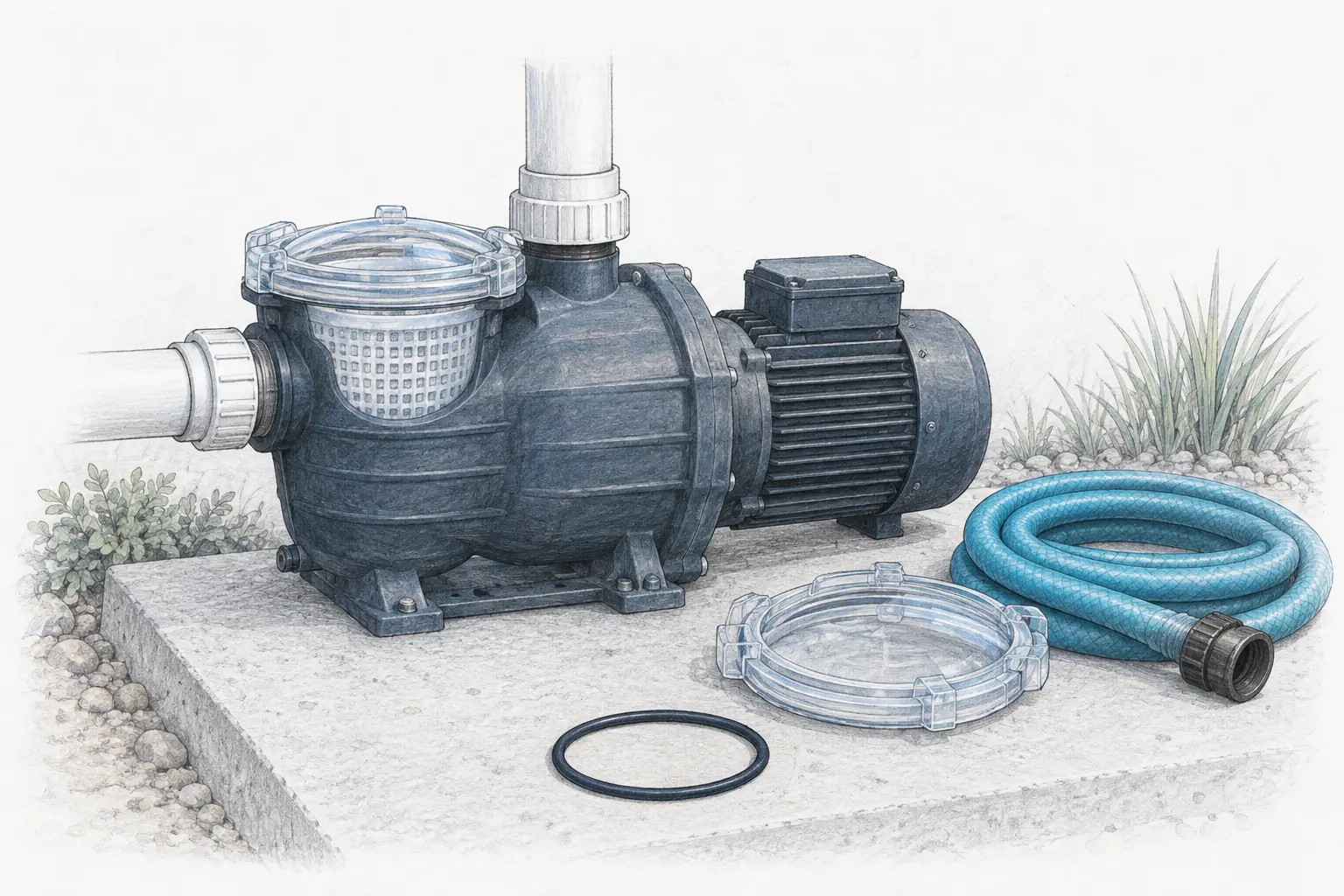
Pool Pump Not Priming (2026): Causes and Fixes in Order
Accessories
A pool pump that will not prime is pulling air, not failing. Work the suction side in order: water level, baskets, lid seal, fittings. Most fixes cost under $10 and take an afternoon.
Our picks
A pump moving water is boring. A pump moving air is loud, hot, and useless. The motor spins, the basket churns, and the return jets sit quiet. The pool pump not priming problem feels like a breakdown, but it is usually a seal: air is getting into the suction line somewhere between the skimmer and the impeller, and the pump cannot pull a solid column of water because the column keeps breaking.
The good news is the order of operations. Cheap checks come first, and most owners solve it with a $4 to $8 part. Start here, then use the pool pump repair guide if you find a drip rather than an air leak, or the best pool pump guide if the wet end is finished. This page sits with the pool accessories guides and the best pool skimmer pillar, because the suction side starts at the pool, not at the pad.
How long should a pool pump take to prime?
A healthy pump primes in about 30 to 60 seconds, and you should shut it off at 90 seconds if the basket is still churning. Running a dry pump for 2 to 3 minutes overheats the shaft seal, which turns a cheap seal job into a motor repair. Watch the clear lid rather than listening from the kitchen.
If the pot fills and stays full, you are done and the problem was a pocket of air. If it fills, runs clear, then drains back down, you have a slow leak that only shows up once the pump is at speed. That pattern is worth writing down, because it narrows the search to a handful of fittings.
Why is my pool pump not priming?
Air is entering the suction side, which is everything from the skimmer mouth to the front of the impeller. Repair guides put a dry or grit-packed lid O-ring at roughly 45% of cases, and water level or lid seal together at about 60%. A suction-line fitting leak covers most of the rest. Work them in that order.
Low water level at the skimmer
If the water sits below about the middle of the skimmer mouth, the skimmer stops pulling water and starts gulping air. That is free to fix and worth checking before you open anything. Top the pool up to the middle of the mouth, run the pump, and watch the basket. In a hot week a pool can lose a quarter inch or more a day to evaporation, which is exactly how a pump that ran fine on Sunday fails to prime on Thursday.
A dry or flattened lid O-ring
The strainer lid has to seal airtight. A ring that sat dry over winter hardens and flattens, and a ring that looks fine can still leak because grit in the groove holds it off the seat. Pull the ring, wipe the groove with a rag, and rub the rubber between your fingers.
If your fingers come away with a black smudge, the rubber is degrading and the ring is finished. Fit the new ring dry or with a thin film of silicone lube, then hand-tighten the lid only. Tools crack the clear lid at the threads.
Air leak on the suction line
A leak does not have to spray water, because the suction side pulls inward. The field test is a can of shaving cream, not gel. With the pump running, dab foam on one fitting at a time: the pump union at the inlet, the drain plugs, the valve stems, then the glued joints heading back to the pool. Where the foam dimples or disappears, that is your leak. A $3 union ring or a quarter turn on a loose collar often ends the whole problem.
A clogged basket or impeller
A packed strainer basket starves the pump of water, and a partly clogged impeller lowers flow until the pump cannot hold suction. Clear both. Reach into the pump inlet with the power off and feel for debris on the impeller vanes, especially after a storm or a heavy leaf week. A pool pump basket that no longer seats evenly is its own air path, so check that the basket drops all the way down.
How do I prime a pool pump by hand?
Turn the pump off, close the valves, remove the strainer lid, and fill the pot with a hose until the water level stops dropping in the housing. That means the suction line is full. Refit the lid hand-tight, open the valves, and start the pump. Watch the basket, not the clock.
Most people stop filling too early. A pot that looks full in 10 seconds drains down the suction line and leaves you priming air again. Keep the hose running through the first few drops and give it another 30 seconds. Then start the pump and let the last bubbles clear, which should take under a minute on a sealed system.
Which part should I replace first?
Buy the lid seal before you buy anything else. It is the cheapest part in the chain, it is the most likely failure, and ruling it out tells you whether you have a $4 problem or a buried-pipe problem. Keep a spare on the shelf, because a ring that fails mid-season will fail again.
The lid seal that fixes most prime failures
The Pool Ruler SPX1500P two-pack covers the Hayward PowerFlo and TurboFlo above-ground pumps, and it includes a tube of grease so you are not hunting for pool lube with the pump open on the pad. Buna-N is the OEM rubber for strainer cover seals, so this is the right material rather than a hardware-store guess. Grease the ring lightly, never with petroleum jelly, and reseat it flat in the groove before the lid goes on.
The replacement pump for a dead wet end
The AQUASTRONG 1 HP is a self-priming above-ground pump with a 4,945 GPH flow rating, a 6 ft UL-tested cord, and 1.25 in and 1.5 in adapters for Schedule 40 PVC. Replace rather than rebuild when the wet end is cracked around a bolt, the impeller is chewed, or the motor is burned out and the pump is 8 or more years old. At that age a seal-and-motor service usually comes close enough to a new pump that the new body is the better buy.
Sizing a replacement before you order
Match horsepower and flow to your pool, not to the old pump's sticker alone. A 1 HP single-speed body suits many above-ground pools, while larger in-ground systems usually want more flow or a variable speed pool pump that can run lower for most of the day. Check the filter pressure after the swap with a filter pressure gauge, because a clean system and a dirty one read very differently on day one.
When is the pump itself the problem?
When you have sealed the lid, tightened every fitting, cleared the baskets, and the pump still will not hold prime, the fault is past the reachable plumbing. A cracked strainer pot cannot be sealed, and a failed shaft seal lets air in from behind the impeller. Both show up with moisture or mineral staining under the motor end.
Is the motor dead or is it air?
A prime failure still hums and spins. A dead motor hums and does not turn, or trips the breaker, or is silent. That is a different job. If the shaft never spins, stop resetting the breaker and treat it as a motor or capacitor fault rather than an air leak. Our pool pump motor guide covers that path.
What a buried leak costs
If every accessible fitting is dry and the pump still loses prime, the leak is likely in the underground suction line. Finding it needs a pressure test, and repairs run several hundred dollars depending on depth and access. Compare that against above-ground pump replacement pricing before you authorize a dig, because an older system sometimes makes more sense replaced than excavated.
Which checks prevent this next season?
Three habits cover it. Lubricate the lid ring with silicone grease at the start of every season. Keep the skimmer and pump baskets clear, twice a week in heavy swim season. Keep the water at the middle of the skimmer mouth so the pump never has to gulp. None of those take more than a few minutes, and together they head off the failure that stops circulation for a day or two in the middle of a hot week.
Bottom line
A pool pump not priming is an air problem, and the order to work it is water level, baskets, lid seal, fittings, impeller. Buy the Pool Ruler SPX1500P lid O-ring first for a Hayward above-ground pump, keep a spare on the shelf, and only look at a replacement when the wet end is cracked or the motor is silent. The AQUASTRONG 1 HP self-priming pump is the replacement body when repair stops making sense. Seal the cheap parts first and you will rarely need the expensive one.
Frequently Asked Questions
How long should a pool pump take to prime?
A healthy pump pulls a solid column of water in about 30 to 60 seconds. You should see the bubbles clear under the clear lid in that window. If it is still churning at 90 seconds, shut it off and go looking for air instead of letting it run.
Why is my pool pump turning on but not pumping?
The motor is running, so the electrical side is fine. What is missing is water. Air on the suction side means the impeller spins in air instead of water, and the basket never fills. Check the water level, the baskets, and the strainer lid seal before you suspect the pump.
How do I get rid of an airlock in a pool pump?
Turn the pump off, open the strainer lid, and fill the pot with a garden hose until the water stops dropping in the housing. That pushes the air out of the suction line. Close the lid hand-tight and restart. If it will not hold, you have a leak rather than a pocket of air.
What causes a pool pump to lose its prime?
A dry or grit-packed strainer lid O-ring is the most common cause, followed by a low water level at the skimmer and a loose union or drain plug. A failed check valve is the one that makes a pump lose prime when it is switched off rather than while it runs.
Do I need to fill the pump pot every time it starts?
On an above-ground pump, yes. It sits above the water line, so the suction line drains back at every stop and the pump re-primes by design. On an in-ground system the riser should hold water. If you prime by hand every morning, you have a leak to find.
Can I prime a pump without a garden hose?
A bucket works. Pour water into the strainer pot until it stops draining down the suction line, which takes several pours. A hose is faster because it keeps filling while the line burps. Never run the pump while you are filling the pot.
What does a half-full strainer basket mean?
A basket that sits about half full while the pump runs is a confirmed air leak. The pump is moving some water and pulling air at the same time. A basket that fills, runs clear, then drains is a slow leak that only shows up once the system is at speed.
When should I stop and call a pool tech?
Call one if the pump will not hold prime after you have cleaned the lid seal, tightened the fittings, and topped up the water. A buried suction line leak needs a pressure test, and that runs several hundred dollars. An 8-year-old pump that keeps losing prime is usually better replaced than rebuilt.